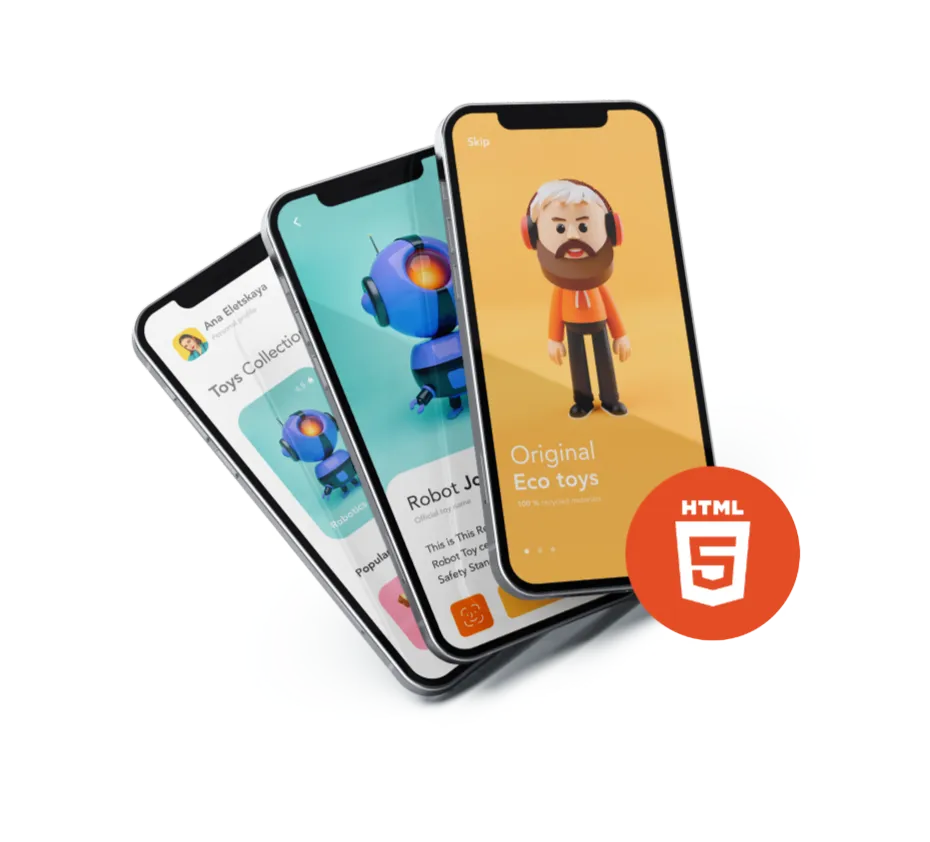
HTML5 apps provide a convenient way of developing mobile applications that can run on multiple platforms. These apps are a set of web pages that are specifically designed for mobile devices. They come with a plethora of advanced features, such as streaming video and audio data, handling graphics and animation, and offline support. Additionally, they offer semantic elements, form controls, multimedia components, and various APIs that support geolocation services, drag-and-drop operations, local application caching, and much more.
HTML5 rarely works independently. Most HTML5 applications incorporate Cascading Style Sheets (CSS), which determine how the HTML elements are displayed on a browser, and JavaScript, which includes the APIs for handling text, objects, and arrays. These technologies are supported by all major browsers, making it possible to develop web-based applications that can run on a wide range of devices.
HTML5 mobile application development frameworks are toolkits that come with libraries of CSS and JavaScript files, which developers can include in the HTML. These frameworks take care of many issues that arise while building HTML5 apps, such as manipulating and recycling Document Object Model (DOM) elements to improve performance. They also simplify the implementation of behavior that relies on JavaScript, like screen transitions or list scrolling. As a result, even beginners can easily create HTML5 apps since a lot of the subtleties of development are already taken care of.
When choosing a framework, IT administrators should do some research to ensure they select the right one. This is because different frameworks come with their limitations and issues, which can become more apparent as the application becomes more complex.
Even slight variations in devices and browsers can affect how an application functions in different environments. As a result, developers may have to build applications based on the lowest common denominator to ensure they work across all environments. However, this approach may negatively impact the user experience (UX). Despite these challenges, developers with adequate training and experience should be able to deliver secure and high-performance web-based applications.
What to keep in mind when building HTML5 apps
- 1. Memory and performance limitations are important considerations for HTML5 mobile application development.
- 2. Developers should carefully control page flow and the implementation of the Document Object Model (DOM).
- 3. The more complex the object model, the longer it takes to navigate, so it should be kept lightweight to ensure that performance does not lag.
- 4. User experience (UX) should be a top priority when developing HTML5 mobile apps.
- 5. The app should be tested on various platforms to account for different device types, screen sizes, browsers, and operating systems.
- 6. Most apps should support offline operations to account for disruptions in connectivity.
Above all, developers should keep UX in mind. To ensure quality UX, HTML5 mobile apps should be lightweight so performance doesn't lag. In addition, admins should test the app on various platforms to account for different device types, screen sizes, browsers, and operating systems. Most apps also need to support offline operations to account for disruptions in connectivity.
HTML5 Apps
HTML5 apps operate within a web browser, offering a cross-platform solution that works seamlessly on various devices and operating systems. These apps are developed using standard web technologies like HTML, CSS, and JavaScript. The benefits include:
- 1. Cross-Platform Compatibility: Run your HTML5 app on multiple platforms, reducing development time and costs.
- 2. Easy Updates: Update your app in real time without requiring users to download new versions.
- 3. Cost-Effective Development: Develop one codebase for multiple platforms, optimizing development expenses.
Native Apps
Native apps are built for a specific operating system, utilizing its native programming language (Swift for iOS, Kotlin/Java for Android). Here's why native apps stand out:
- 1. Optimized Performance: Leverage the full potential of a device's capabilities for enhanced speed and responsiveness.
- 2. Access to Device Features: Utilize device-specific features seamlessly, providing a tailored user experience.
- 3. Enhanced Security: Benefit from platform-specific security measures, ensuring data protection.
Choosing the Right Path
- Consider Your Audience: If your target audience spans multiple platforms, HTML5 may be an efficient choice. For a more immersive experience on a specific platform, native development could be preferable.
- Performance Requirements: If high performance and access to specific device features are critical, native development is recommended. HTML5 is suitable for less performance-intensive applications.
- Development Time and Costs: Assess your budget and timeline. HTML5 can be more cost-effective and time-efficient for cross-platform development.
Cross-Platform Compatibility:
HTML5 ensures seamless compatibility across devices and platforms, facilitating the development of applications and websites that work consistently on various browsers and operating systems.
Rich Multimedia Support:
Native support for audio and video elements eliminates the need for third-party plugins, enhancing performance and improving the overall multimedia experience for users.
Enhanced Interactivity and Animation:
HTML5 introduces native support for interactive elements and animations, empowering developers to create engaging, dynamic content without relying on external technologies.
Offline Application Cache:
HTML5's offline application cache feature allows web applications to function without a constant internet connection, providing valuable usability in areas with unreliable connectivity.
Mobile-Friendly Features:
Optimized for mobile devices, HTML5 incorporates responsive design principles, ensuring that websites and applications are inherently mobile-friendly, contributing to a seamless user experience.