Build and Scale Faster
150+ products shipped for startups and enterprises by engineers focused on real outcomes.
"Their ability to quickly understand an unfamiliar use case and respond creatively to it is impressive."

Anonymous
Executive, Pured Disc Golf

"TechnBrains resolved challenges efficiently and turned my vision into a solid, functional product with a strong foundation."

Jalen Gibbs
Founder, STREAMLINE LIVE
"The talent they provided was solid, but more importantly, they were quick to align with our way of working."

Nancy Snyder
Managing Director, MimeCast
Our trusted clients


Start Your Product Journey Today
Turn your idea into a working product. Share a few details and we'll help define the roadmap, timeline, and execution approach.
SaaS Development: All You Need to Know
SaaS development, which stands for Software as a Service development, is the process of creating and delivering software applications over the Internet using a subscription model. Unlike traditional software that you install on your computer, SaaS applications are hosted by a provider in the cloud. This allows users to access the software from anywhere with an internet connection, typically through...


Updated May 22, 2024
SaaS development, which stands for Software as a Service development, is the process of creating and delivering software applications over the Internet using a subscription model. Unlike traditional software that you install on your computer, SaaS applications are hosted by a provider in the cloud. This allows users to access the software from anywhere with an internet connection, typically through a web browser or a mobile app.
The SaaS (Software as a Service) revolution is in full swing, transforming how businesses operate. From customer relationship management (CRM) to project management and marketing automation, SaaS offers a cost-effective and scalable solution for businesses of all sizes. The market is booming, with revenue projected to reach a staggering $282.2 billion in 2024. If you’re considering developing your own SaaS application, this blog post is here to guide you through everything you need to know.
What is SaaS or software as a service?
As a developer, I remember the pre-cloud days when installing hefty software like Microsoft Office was a routine. For years, my workflow involved managing licenses and local installations of these tools. Thankfully, the industry has shifted towards the cloud, offering a more efficient way to access development tools. This evolution, known as Software as a Service (SaaS), is a game-changer.
Now, powerful tools like Git version control (for code management) and cloud-based IDEs (Integrated Development Environments) like Visual Studio Code are readily available without cumbersome local installations. This shift allows developers to focus on building amazing applications rather than managing software licenses and configurations. SaaS provides online access to applications through a web browser without the need for local installation.
Characteristics of SaaS development
Characteristics of SaaS development offer significant advantages for software development teams, allowing them to focus on building innovative and user-friendly applications while ensuring efficient deployment, maintenance, and scalability.
- Cloud-based: This eliminates the need for complex software installation and configuration on individual user devices. Developers can focus on building the application’s core functionalities and logic without worrying about compatibility issues across different operating systems.
- Subscription model: This provides a predictable income stream, allowing developers to plan resources and invest in ongoing development and improvement of the SaaS application.
- Scalability: SaaS applications need to be designed to handle an ever-increasing user base. Developers need to employ techniques like microservices architecture and containerization to ensure the application can scale efficiently without performance bottlenecks.
- Automatic updates: SaaS development frees up developers from the burden of manually deploying updates to individual users. They can focus on developing new features and functionality, knowing that updates will be automatically rolled out to all users.
The Benefits of SaaS Development for Businesses
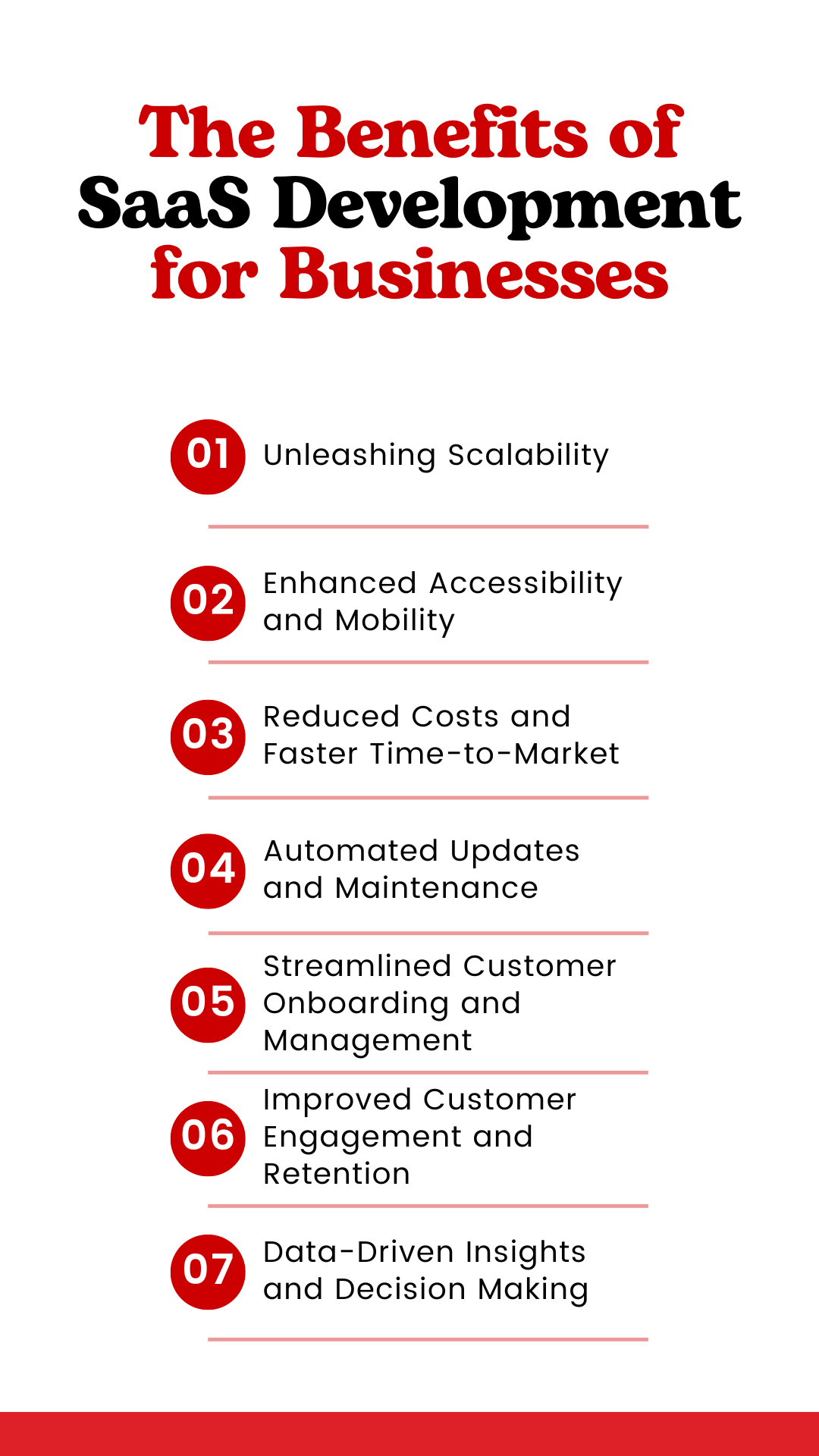
SaaS (Software as a Service) development offers a powerful solution, empowering businesses to generate recurring revenue and strategic advantages. Let’s dive into the compelling benefits that SaaS development offers businesses:
- Unleashing Scalability: SaaS applications are inherently scalable. Built on cloud infrastructure, they effortlessly adapt to accommodate surges in user base or data volume. This eliminates the burden of costly hardware upgrades and frees up resources for core business activities.
- Enhanced Accessibility and Mobility: SaaS applications are accessible from anywhere, anytime, on any device with an internet connection. This empowers your workforce with unparalleled flexibility, fostering remote collaboration and productivity gains. Imagine your sales team closing deals on the go or your customer support reps resolving issues remotely—all thanks to SaaS’s mobility.
- Reduced Costs and Faster Time-to-Market: Traditional software development involves hefty upfront investments in licensing, hardware, and IT infrastructure. SaaS development offers a cost-effective alternative. By leveraging pre-existing cloud infrastructure, businesses can significantly reduce development costs and accelerate time-to-market, allowing them to capitalize on opportunities swiftly.
- Automated Updates and Maintenance: Gone are the days of managing cumbersome software updates and bug fixes on individual machines. SaaS applications are automatically updated by the provider, ensuring your users always have access to the latest features and security patches. This frees up your IT team to focus on strategic initiatives.
- Streamlined Customer Onboarding and Management: SaaS applications typically offer self-service onboarding processes, minimizing the need for extensive training and support. This translates to faster customer acquisition and lower onboarding costs. Additionally, centralized user management features make managing and scaling customer accounts a breeze.
- Improved Customer Engagement and Retention: SaaS applications can be continually updated with new features and functionalities based on user feedback. This iterative development approach fosters deeper customer engagement and satisfaction, ultimately leading to higher retention rates.
- Data-Driven Insights and Decision Making: SaaS development generates valuable user data, providing businesses with real-time insights into customer behavior, usage patterns, and market trends. This empowers data-driven decision-making, allowing businesses to optimize their offerings and target their marketing efforts more effectively.
SaaS software development helps businesses gain a competitive edge through agility, scalability, and a focus on core competencies. SaaS empowers you to deliver exceptional value to your customers, fostering long-term relationships and sustainable growth.
Why Develop a SaaS Application?
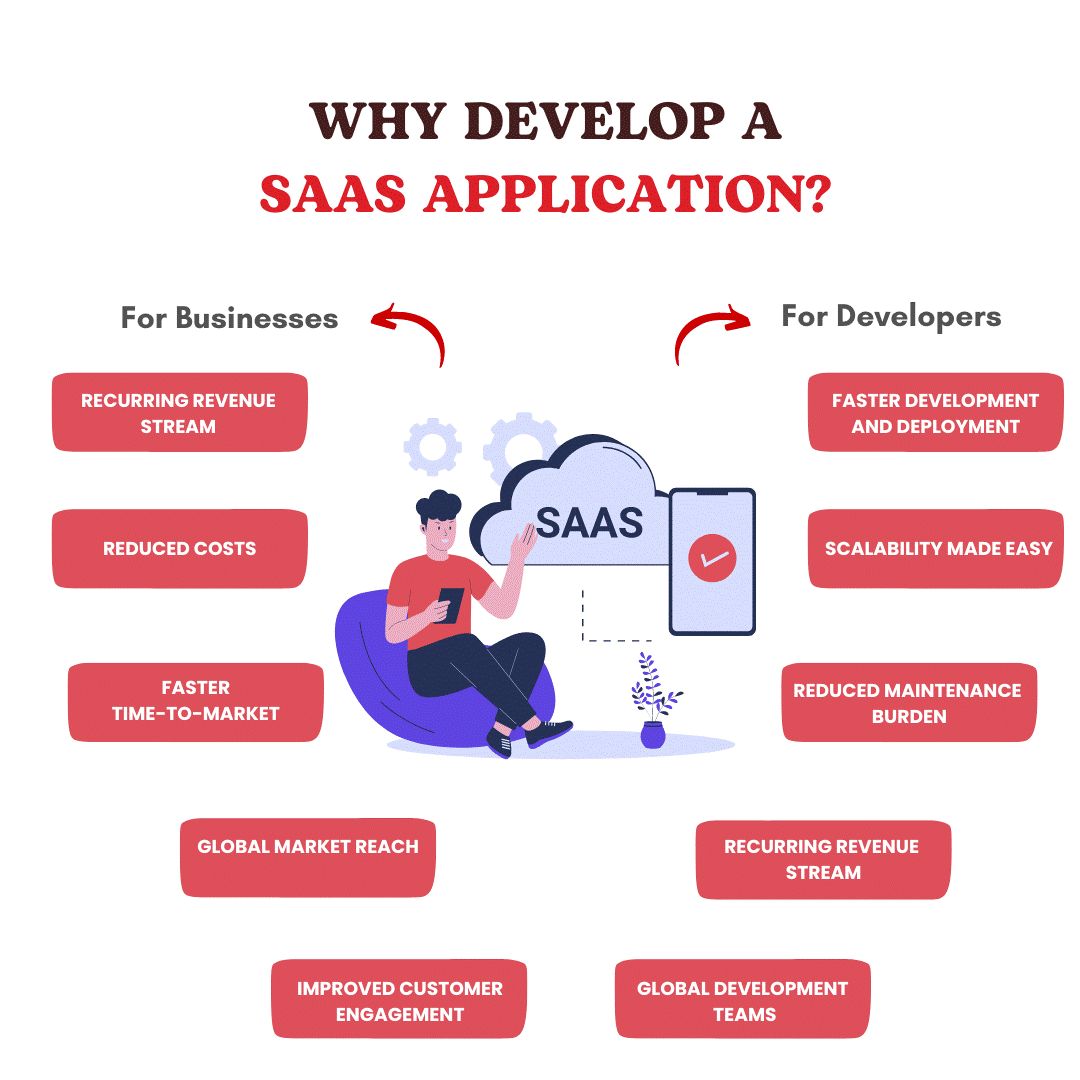
The statistics speak for themselves. With projections reaching an incredible $282.2 billion in 2024. But beyond the impressive numbers, SaaS development offers a compelling value proposition for both developers and businesses. Here’s a detailed breakdown of the key benefits:
For Developers
If you are a developer reading this, with SaaS development, you can easily build innovative and scalable applications. Here is a breakdown:
- Faster Development and Deployment
SaaS capitalizes on cloud infrastructure, eliminating the need for complex client-side installations. This translates to faster development cycles and streamlined deployment processes, allowing you to focus on core functionalities and innovation.
- Scalability Made Easy
SaaS applications are inherently scalable. Built on cloud platforms like AWS or Azure, they can seamlessly adapt to accommodate surges in user base or data volume. You can utilize containerization (a virtualization method that converges an application’s components into a single container image) and microservices architecture to optimize further scalability, which will help with resource efficiency.
- Reduced Maintenance Burden
I know how frustrating it can be to manage individual software updates across user devices. With SaaS, updates are automatically rolled out centrally by the provider. This is my favorite advantage because it frees you to focus on building new features and addressing critical issues.
- Recurring Revenue Stream
By adopting a subscription model, SaaS offers developers a predictable and recurring source of income. This financial stability allows for continuous development, reinvestment in the product, and the creation of a sustainable business model.
- Global Development Teams
SaaS development fosters collaboration beyond geographical boundaries. You can work together seamlessly on a single codebase hosted in the cloud, making it easier to assemble and manage remote development teams. In fact, you can utilize Staff Augmentation Services to fill specific skill gaps within your development team. These services will provide access to a global pool of qualified developers, allowing you to build the best possible team for your SaaS project. (A win-win situation for both)
For Businesses
Now, if we talk about businesses and SaaS development, businesses can gain a competitive edge through cost-effective, globally accessible solutions that foster lasting customer relationships.
For example, working in a custom software development company, I have witnessed some challenges and limitations associated with traditional on-premise software. Some of them were:
High upfront costs: Developing and deploying custom software required significant investments in licensing, hardware infrastructure, and ongoing maintenance.
Limited scalability: Scaling traditional software to accommodate a growing user base was complex and expensive, hindering business growth.
Geographical restrictions: On-premise software was limiting our customer base to those who can access your physical servers, hindering global expansion.
Outdated features: The biggest challenge with on-premise software was keeping pace with evolving user needs and technological advancements, which led to outdated functionalities.
By embracing SaaS development, my company, and even your business can overcome these limitations and SaaS development benefits:
- Recurring Revenue Stream:
SaaS provides businesses with a predictable and recurring revenue stream through subscription fees. This consistent income stream improves financial planning and forecasting, fostering long-term business growth.
- Reduced Costs
Developing traditional software involves hefty upfront investments in licensing, hardware, and IT infrastructure. SaaS offers a cost-effective alternative. By leveraging pre-existing cloud infrastructure, businesses can significantly reduce development costs and minimize ongoing maintenance expenses.
- Faster Time-to-Market
With the reduced development complexity associated with SaaS, businesses can bring their products to market quicker, allowing them to capitalize on emerging market trends and seize opportunities before competitors.
- Global Market Reach
SaaS applications can be accessed from anywhere with an internet connection, eliminating geographical limitations. This allows businesses to expand their customer base globally and tap into international markets.
- Improved Customer Engagement
SaaS allows for continuous updates and feature additions based on user feedback. This iterative development approach fosters deeper customer engagement, leading to higher user satisfaction and long-term retention.
Features for Building Powerful SaaS Applications
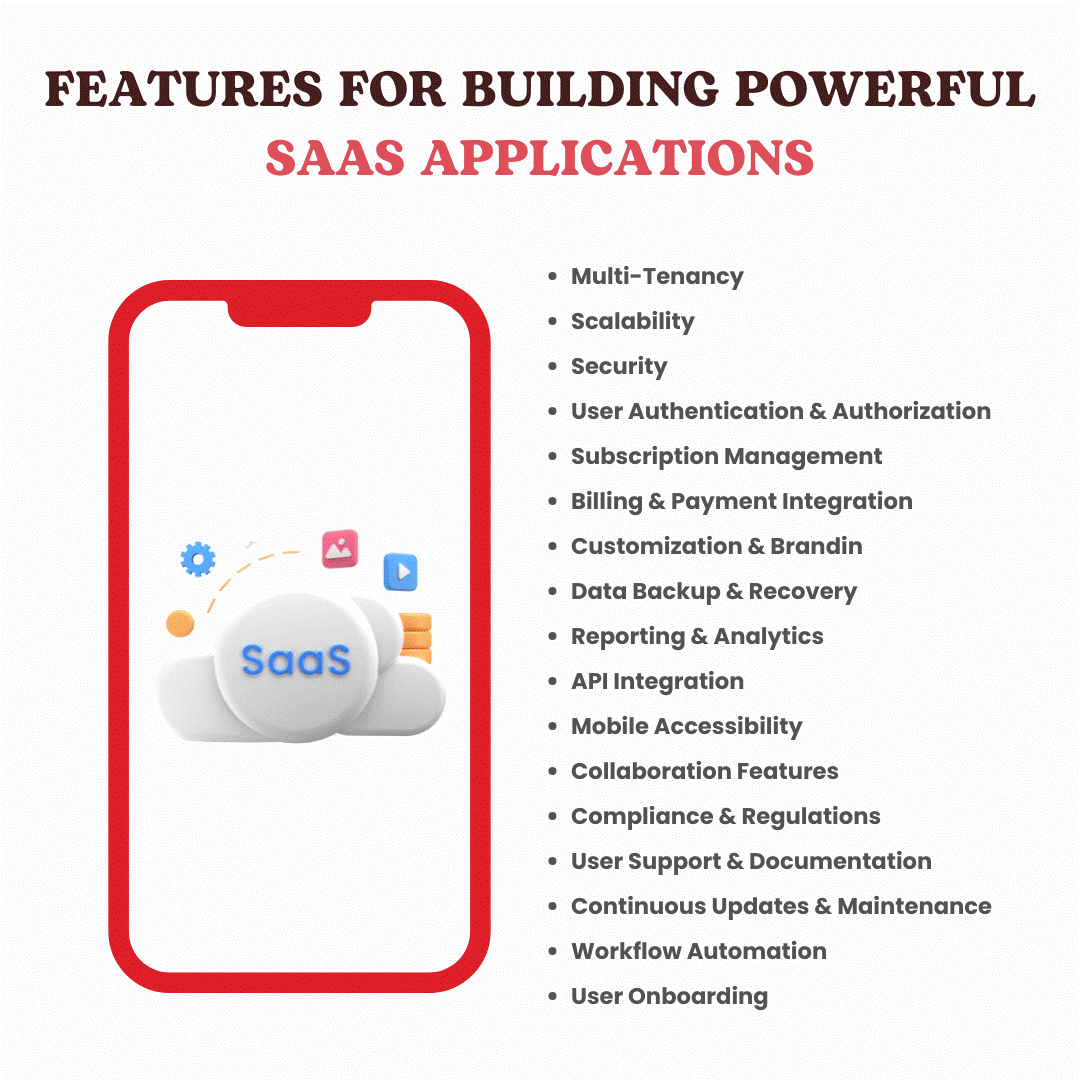
Here are some robust and user-friendly SaaS app development features that we at TechnBrains make sure to integrate:
- Multi-Tenancy: Efficiently serve multiple users from a single instance, maximizing resource utilization and scalability.
- Scalability: Seamlessly adapt to growing user bases and workloads without performance dips.
- Security: Protect sensitive data with robust security measures like encryption, access controls, and secure authentication.
- User Authentication & Authorization: Secure user logins with multi-factor options and granular controls for managing user roles and permissions.
- Subscription Management: Manage subscription plans, billing cycles, invoicing, trials, upgrades, downgrades, and cancellations.
- Billing & Payment Integration: Offer seamless billing with payment gateway integration and support for various payment methods.
- Customization & Branding: Users should be able to personalize the application with branding elements like logos, colors, and themes.
- Data Backup & Recovery: Regular data backups ensure protection against data loss and enable recovery in case of incidents.
- Reporting & Analytics: Provide users with valuable data insights through robust reporting tools and customizable dashboards.
- API Integration: Facilitate integration with third-party services through API support, extending the application’s functionality.
- Mobile Accessibility: Ensure access from any device with responsive design or dedicated mobile apps.
- Collaboration Features: Foster teamwork with features like real-time messaging, file sharing, and collaborative document editing.
- Compliance & Regulations: Adhere to relevant industry standards for data privacy and legal compliance.
- User Support & Documentation: Provide accessible user support channels and comprehensive documentation for a smooth user experience.
- Continuous Updates & Maintenance: Regular updates address bugs and security vulnerabilities and introduce new features, keeping the SaaS app current and efficient.
- Workflow Automation: Enhance user efficiency by automating repetitive tasks and workflows.
- User Onboarding: Streamline user adoption with tutorials, guides, and intuitive interfaces for a quick learning curve.
SaaS Development Methodologies
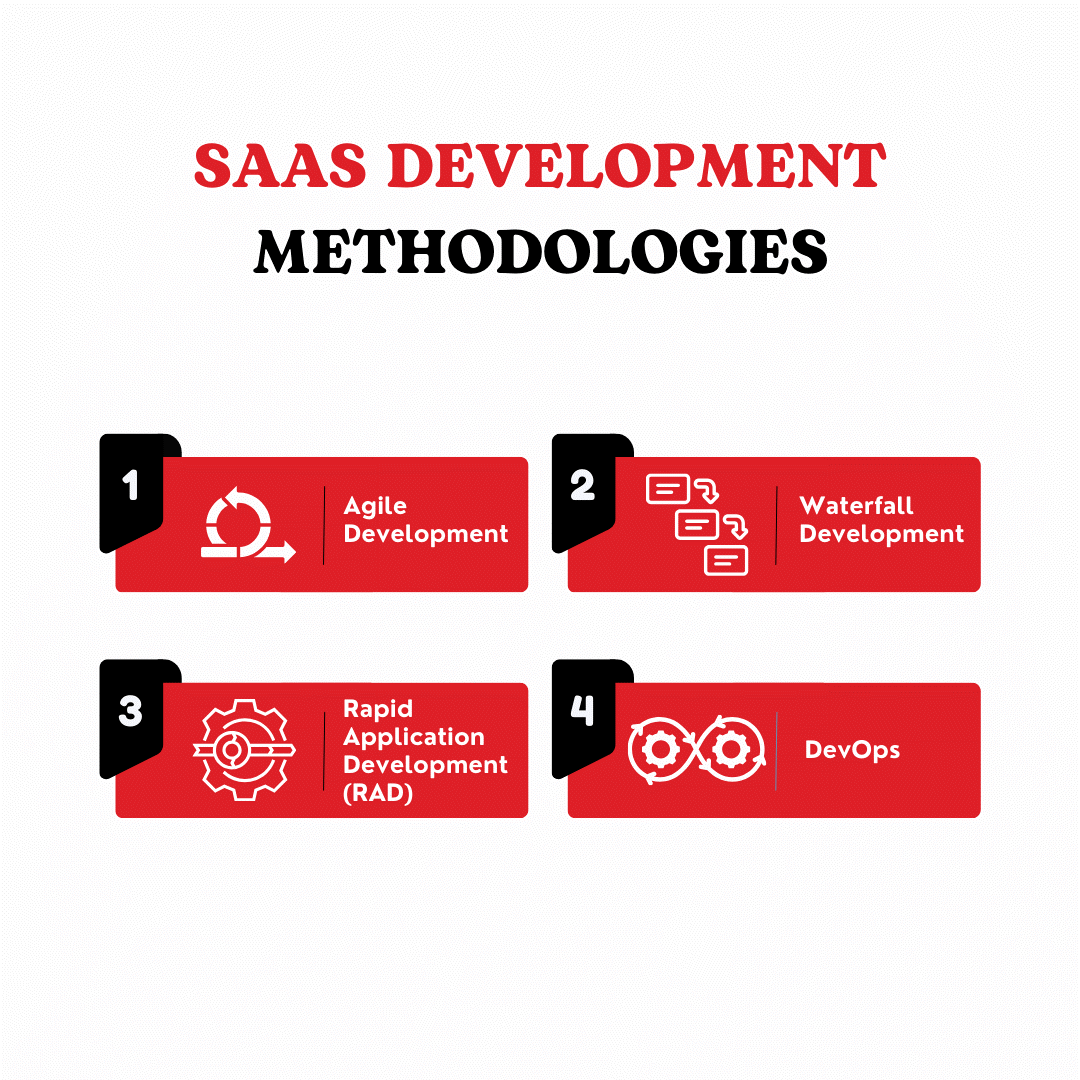 The success of your SaaS application hinges on a well-defined development methodology. Here’s a short of popular approaches to guide your choice:
Agile Development
- Focus: Iterative development with frequent releases and user feedback integration.
- Benefits: Adaptability, faster time-to-market, reduced risk of building the wrong features.
- Drawbacks: It requires a strong product vision and a flexible team.
Waterfall Development
- Focus: Linear, step-by-step development with a rigid plan.
- Benefits: Clear documentation and predictable timelines (in theory).
- Drawbacks: Inflexible, slow to adapt to changes, less room for user feedback.
Rapid Application Development (RAD)
- Focus: Rapid prototyping and user feedback loops to accelerate development.
- Benefits: Faster development cycles and a user-centric approach.
- Drawbacks: Requires strong prototyping skills, which may result in code quality issues if rushed.
DevOps
- Focus: Collaboration between development, operations, and security for continuous integration and delivery (CI/CD).
- Benefits: Faster deployments, improved reliability, better communication and collaboration.
- Drawbacks: It requires a cultural shift within teams, and there is a potential need for additional tooling.
Choosing the Right Methodology
The SaaS development methodologies depend on your project’s specific needs. Consider these factors:
- Project complexity: Agile is ideal for complex projects with evolving requirements, while waterfall might suit simpler, well-defined projects.
- Team size and structure: Smaller, flexible teams thrive in agile environments. Larger, siloed teams might benefit from a more structured approach like Waterfall.
- Time-to-market pressure: Agile’s iterative nature allows for faster releases. Waterfall offers a more predictable timeline (if strictly adhered to).
- Client involvement: Agile fosters close client collaboration. Waterfall needs more client interaction during the development phases.
SaaS Development Process: Building Your SaaS Application
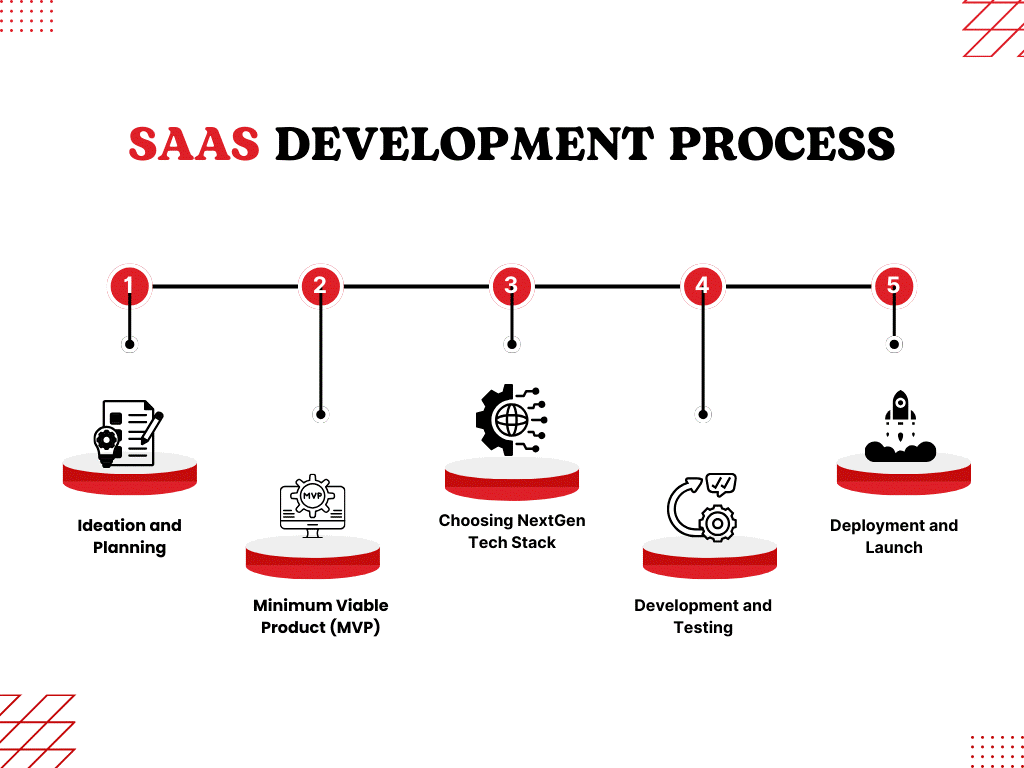
As a developer who’s dived into SaaS development, let me walk you through the exciting yet challenging journey of building your own SaaS application. The SaaS Development Process has 5 steps:
- Ideation and Planning
- Minimum Viable Product (MVP)
- Choosing NextGen Tech Stack
- Development and Testing
- Deployment and Launch
Here’s a breakdown of SaaS platform development in each stage, packed with insights and lessons learned from my own experience:
1. Ideation and Planning
It all starts with a deep understanding of who you’re building for. Conduct thorough market research, identify your target customer’s pain points, and define a clear value proposition that directly addresses their needs.
Pro Tip: In my first SaaS project, I almost missed the target audience. Extensive user interviews helped me refine the value proposition in SaaS development, ensuring the product resonated with the right people.
Think about what makes your SaaS application unique. Distill your offering into a concise statement that clearly outlines the problem you solve and the benefits you deliver. Personal Experience: During the planning phase, invest time in competitor analysis. Understanding existing solutions will help you differentiate your SaaS application and showcase its unique value proposition.
Only try to build some things at a time. In SaaS development, prioritize core functionalities that directly address your target audience’s needs. Utilize tools like user story mapping to visualize the functionalities and user workflows. Lesson Learned: In a past project, we tried to cram too many features into the initial build. This led to development delays and user confusion, so prioritize ruthlessly!
2. Minimum Viable Product (MVP
I’ve learned this the hard way: Don’t get caught up in building the perfect application right away. Focus on creating a Minimum Viable Product (MVP) with core functionalities that validate your concept and gather valuable user feedback. Think of it as the first iteration of your masterpiece. Personal Anecdote: My most successful SaaS venture started with a bare-bones MVP. This allowed us to gather early user feedback and iterate based on their needs, ultimately leading to a more successful product launch.
Embrace an agile development methodology. This iterative approach allows for continuous development cycles based on user feedback in SaaS development. Break down development into manageable sprints, gather feedback after each iteration, and refactor your application accordingly.
Treat user feedback as the holy grail. Use tools like surveys, beta testing programs, and user interviews to gather early user feedback. This feedback will guide your development roadmap and ensure that your application solves real user problems.
Pro Tip: Don’t be afraid of negative feedback. It’s a valuable opportunity to course-correct and refine your offering.
3. Choosing NextGen Tech Stack
Choosing the tech stack defines the foundation and tools you’ll use for SaaS development and testing. It makes sense to address this decision before diving into those stages. By selecting the tech stack first, you ensure the development and testing phases are tailored to the specific technologies and frameworks you’ve chosen. Here are some factors to consider when making your decision:
Frontend Development:
- Modern Frameworks: Consider using battle-tested frameworks like React or Angular for their robust features, scalability, and large developer communities. However, for simpler applications, HTML5, CSS, and Bootstrap might suffice.
- Emerging Options: Look at frameworks like Vue.js or Svelte, which offer a lightweight and performant alternative to React or Angular.
Backend Development:
- Microservices Architecture: Embrace a microservices architecture using frameworks like Spring Boot (Java) or Express.js (Node.js) to ensure modularity, scalability, and independent deployments.
- Serverless Functions: Consider leveraging serverless functions on platforms like AWS Lambda or Azure Functions for specific tasks, reducing infrastructure management overhead.
Database:
- Cloud-Based Databases: Opt for cloud-based database solutions like Amazon DynamoDB (NoSQL) or Azure SQL Database (Relational) for scalability, ease of management, and automatic backups.
- NoSQL for Specific Needs: For applications with heavy data volumes or unstructured data, consider NoSQL solutions like MongoDB or Cassandra.
Content Management (Optional):
- Headless CMS: If your SaaS application requires content management functionalities, explore headless CMS options like Contentful or Strapi, which offer a flexible API-driven approach.
Cloud Consulting:
- Major Cloud Providers: Based on your needs, budget, and existing infrastructure, choose a reliable cloud provider like AWS, Microsoft Azure, or Google Cloud Platform (GCP).
- Containerization: Utilize containerization technologies like Docker to package your application and its dependencies for consistent and efficient deployments across different environments.
- Automation Tools: Leverage DevOps tools like Jenkins or GitLab CI/CD to automate build, test, and deployment processes, ensuring smooth and efficient releases.
4. Development and Testing
Security is paramount in SaaS Development. It can be ignored. I have even written a blog on the importance of security in custom software development. Follow secure coding practices throughout the development process to prevent vulnerabilities and data breaches. Familiarize yourself with common security threats and implement best practices for data encryption and user authentication.
For instance, A security lapse in a previous project tarnished our reputation. Implement robust security measures from the get-go to avoid costly mistakes.
Utilize a combination of unit testing, integration testing, and user acceptance testing (UAT) to ensure your application functions flawlessly and delivers the promised value. Automated testing saved the day on one project that I was working on. We caught a critical bug during the testing phase, preventing a major issue at launch.
Use a version control system like Git to keep track of changes, collaborate effectively with your team, and revert to previous versions if necessary. Version control can be a lifesaver when things go sideways!
Developer Tip: Master the art of Git commands. This will streamline your development workflow and make collaboration easy.
5. Deployment and Launch
Select a reliable and scalable cloud platform like AWS, Azure, or Google Cloud Platform (GCP) to host your SaaS application. Consider factors like cost, security, and scalability when making your decision.
Here’s a quick breakdown of when to choose each major cloud platform for your SaaS application:
- AWS (Amazon Web Services) is ideal for established businesses with complex needs and high traffic. It offers the most extensive range of services and features but can be costlier for startups.
- Azure (Microsoft Azure): This is a great choice for businesses already invested in the Microsoft ecosystem and seeking tight integration with Microsoft products. Offers strong security features and scalability.
- GCP (Google Cloud Platform): This is excellent for cost-conscious startups or businesses that focus on data analytics and machine learning. It offers competitive pricing and a user-friendly interface.
Lesson Learned: Don’t underestimate the importance of a robust cloud platform. Choose a SaaS application development company with a proven track record and excellent support infrastructure.
Develop a clear and competitive pricing model for your SaaS application. Consider offering different subscription tiers to cater to diverse customer needs. Freemium models can be a great way to attract users, but ensure you have a clear path to monetization.
Personal Tip: Research your competition’s pricing models to understand the market landscape.
Launching your SaaS application is just the beginning. Continuously monitor user behavior, gather feedback, and iterate on your features to ensure your application remains relevant and valuable in the ever-evolving SaaS market.
Remember: Developing a successful SaaS application is a long-term endeavor, not a quick race. Be ready to continually learn, adjust, and enhance your product based on user feedback and market trends. Speaking of market trends, let us discuss the Trends in SaaS Development in the next section.
Trends in SaaS Development 2024
- Deeper Integration of Artificial Intelligence (AI) and Machine Learning (ML)
- Rise of the Micro-SaaS and Vertical SaaS Models
- The Continued Dominance of Cloud-Native Development
- Emphasis on Data Security and User Privacy
- The Rise of Conversational Interfaces and Voice Search
With new technologies and user demands shaping the future, SaaS development has new trends that we can follow. Businesses and developers can stay ahead in the ever-changing world of SaaS by embracing future trends and leveraging innovative solutions to improve efficiency, gain insights, and strengthen customer relationships. Here’s a glimpse into some of the key trends expected to dominate 2024 and beyond:
1. Deeper Integration of Artificial Intelligence (AI) and Machine Learning (ML)
SaaS applications will leverage AI services and ML for tasks like predictive analytics, automated workflows, and personalized user experiences. Imagine a CRM suggesting sales strategies based on customer behavior or a project management tool automatically scheduling tasks based on workload.
- How Businesses Can Embrace It: Invest in SaaS solutions that integrate AI/ML functionalities relevant to your industry. Utilize AI-powered insights to optimize processes, personalize user experiences, and gain a competitive edge.
- How Developers Can Embrace It: Upskill in AI/ML development to build intelligent features into your SaaS applications. Partner with AI experts to leverage their knowledge and accelerate growth.
2. Rise of the Micro-SaaS and Vertical SaaS Models:
Micro-SaaS focuses on solving a very specific user problem with a small, focused application. Vertical SaaS caters to the unique needs of a particular industry. Think of a micro-SaaS solution for scheduling social media posts or a vertical SaaS platform for managing legal documents.
- How Businesses Can Embrace It: Consider micro-SaaS solutions for specific pain points within your existing workflows. Explore vertical SaaS platforms tailored to your industry for a more streamlined and industry-specific experience.
- How Developers Can Embrace It: Identify niche market opportunities and build micro-SaaS solutions that address specific user needs. Consider specializing in building vertical SaaS platforms for a particular industry.
3. The Continued Dominance of Cloud-Native Development:
SaaS applications will continue to be built and deployed on cloud platforms, leveraging the benefits of scalability, security, and global reach.
- How Businesses Can Embrace It: Choose SaaS solutions hosted on reliable and secure cloud platforms. Consider factors like data residency and compliance when selecting a cloud provider.
- How Developers Can Embrace It: Master cloud-native development tools and best practices to build scalable and secure SaaS applications that seamlessly integrate with cloud infrastructure.
4. Emphasis on Data Security and User Privacy:
With increasing data privacy regulations and user concerns, data security will be paramount. SaaS applications will prioritize robust security measures and offer users greater control over their data.
- How Businesses Can Embrace It: Select SaaS solutions with a strong track record of data security and user privacy compliance. Be transparent with your users about how their data is collected, stored, and used.
- How Developers Can Embrace It: Build SaaS applications with security at the forefront. Implement robust security protocols, encryption methods, and user authentication mechanisms.
5. The Rise of Conversational Interfaces and Voice Search:
Users will increasingly interact with SaaS applications through chatbots, voice assistants, and natural language processing (NLP) functionalities. Imagine managing tasks in your project management tool simply by talking to it!
- How Businesses Can Embrace It: Consider SaaS solutions that offer conversational interfaces or voice search capabilities to enhance user experience and accessibility.
- How Developers Can Embrace It: Integrate NLP and conversational UI frameworks into your SaaS applications to allow for voice-based interactions and natural language commands.
Building Your SaaS Application with TechnBrains
Developing a successful SaaS application requires a blend of strategic planning, technical expertise, and a user-centric approach. This comprehensive guide has equipped you with the essential knowledge to navigate the SaaS development journey, from ideation to launch and beyond.
Key Takeaways
- Understand the ever-growing SaaS market and its potential to revolutionize how businesses operate.
- Leverage the power of cloud-based technologies and a next-gen tech stack for scalability, security, and performance.
- Prioritize user needs by adopting an agile development methodology and gathering continuous feedback through MVPs.
- Implement robust security measures to safeguard user data and build trust with your customers.
TechnBrains: Your Trusted SaaS Development Company
While this guide provides a roadmap, building a high-performing SaaS application requires a skilled development team. Here’s where TechnBrains comes in. We are a leading SaaS development company with a proven track record of delivering innovative and scalable solutions. Our team of experienced developers possesses deep expertise in the latest technologies and frameworks, ensuring we can bring your vision to life.
What differentiates TechnBrains?
- In-depth Industry Knowledge: We go beyond just coding. Our team understands the unique challenges and opportunities across various industries, allowing us to tailor SaaS solutions that perfectly address your specific needs.
- Agile Development Expertise: We embrace agile methodologies to ensure rapid development, continuous improvement, and a focus on delivering real value to your users.
- Focus on Security and Scalability: Security is paramount. We build applications with robust security measures in place and leverage the power of cloud platforms to ensure scalability as your user base grows.
- User-Centric Design: We prioritize user experience throughout the development process. Our team will work closely with you to ensure your SaaS application is intuitive, user-friendly, and delivers exceptional value to your customers.
Contact TechnBrains today for a free consultation. Let’s discuss your vision and explore how we can help you build a groundbreaking SaaS application that disrupts your market and achieves sustainable success.
In This Article

Blocked by Backlog or Missed Deadlines?
Senior developers who build, fix, and ship, without slowing your team down.