Build and Scale Faster
150+ products shipped for startups and enterprises by engineers focused on real outcomes.
"Their ability to quickly understand an unfamiliar use case and respond creatively to it is impressive."

Anonymous
Executive, Pured Disc Golf

"TechnBrains resolved challenges efficiently and turned my vision into a solid, functional product with a strong foundation."

Jalen Gibbs
Founder, STREAMLINE LIVE
"The talent they provided was solid, but more importantly, they were quick to align with our way of working."

Nancy Snyder
Managing Director, MimeCast
Our trusted clients


Start Your Product Journey Today
Turn your idea into a working product. Share a few details and we'll help define the roadmap, timeline, and execution approach.
Agile App Development: Benefits and Best Practices
When it comes to mobile app development, traditional, rigid methodologies often need help to keep up with ever-changing user needs and application development trends. This is where agile app development shines. Agile is an iterative development methodology that prioritizes flexibility, continuous improvement, and close collaboration between development teams and stakeholders. This approach breaks down the development process into manageable chunks,...


Updated May 18, 2024
When it comes to mobile app development, traditional, rigid methodologies often need help to keep up with ever-changing user needs and application development trends. This is where agile app development shines.
Agile is an iterative development methodology that prioritizes flexibility, continuous improvement, and close collaboration between development teams and stakeholders. This approach breaks down the development process into manageable chunks, allowing for constant feedback and adjustments throughout the project lifecycle.
In 2024, this is truer than ever. Agile transformation statistics mention that 59% of organizations using Agile methodologies credit it with achieving higher customer satisfaction. 64% of companies are also using the Agile Software Development Lifecycle (SDLC) for custom software development, which has improved their ability to manage changing priorities. This is because Agile prioritizes flexibility, continuous improvement, and close collaboration, making it ideal for navigating the dynamic mobile app landscape.
This blog post explores the world of Agile app development, exploring its core benefits for mobile projects and outlining best practices for successful implementation.
Agile app development
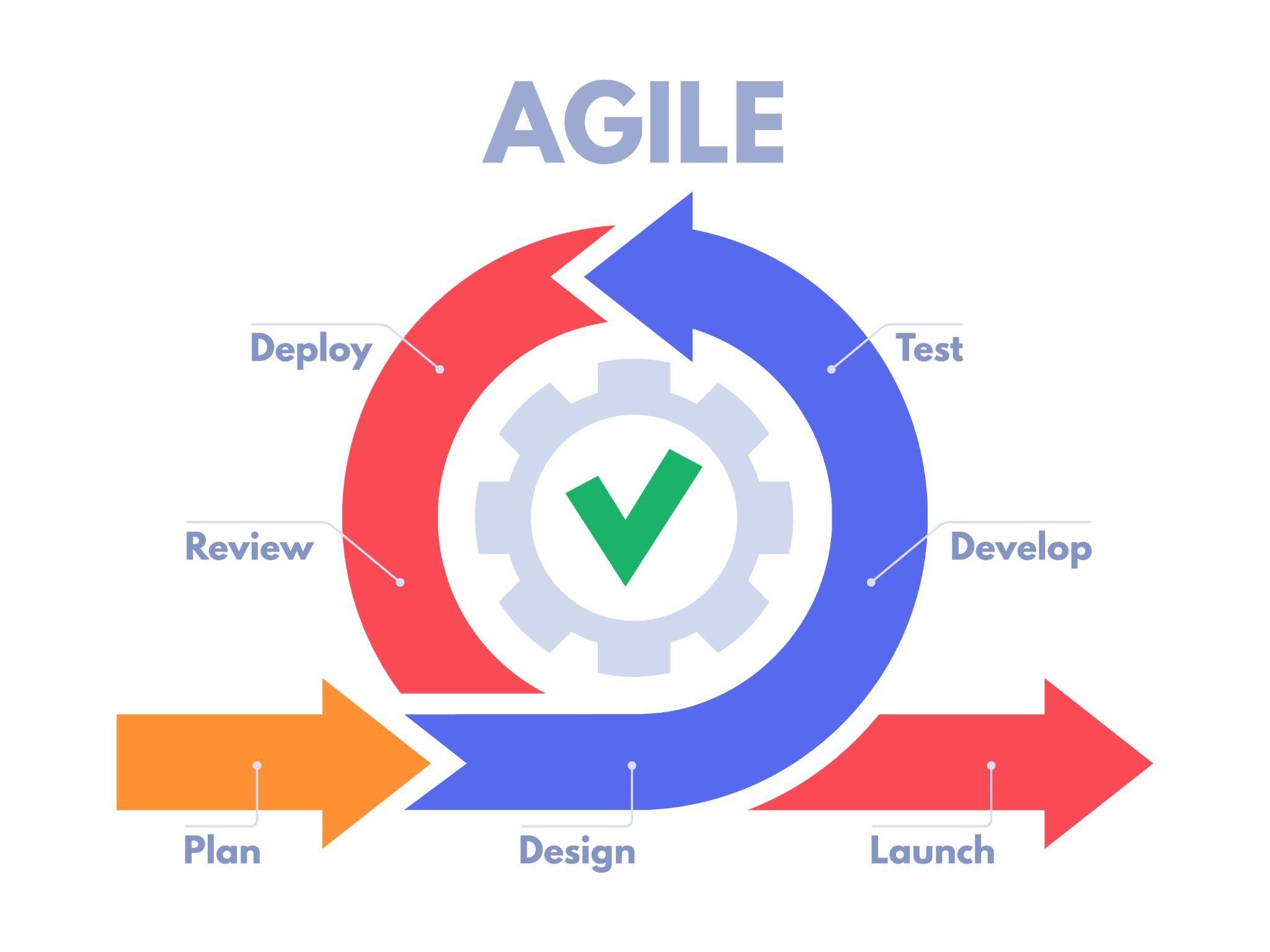
Agile is a software development methodology that follows an iterative and step-by-step approach. Agile application development helps organize the design, planning, development, and testing methods during the software lifecycle. Here are the core principles of Agile mobile app development:
- Focus on User Value: Agile development prioritizes features and functionalities that deliver the most value to users. This ensures your app solves real problems and meets user needs.
- Iterative Development: The development process is broken down into short, manageable sprints. Each sprint focuses on delivering a specific set of features. This allows for continuous feedback and adjustments throughout the development lifecycle.
- Collaboration is Key: Agile fosters close collaboration between developers, product owners, designers, and stakeholders. This ensures everyone is aligned on project goals and user needs.
- Embrace Change: The mobile app landscape is constantly evolving. Agile methodologies are designed to be adaptable, allowing you to pivot and incorporate changes based on user feedback and market trends.
Benefits of Agile App Development
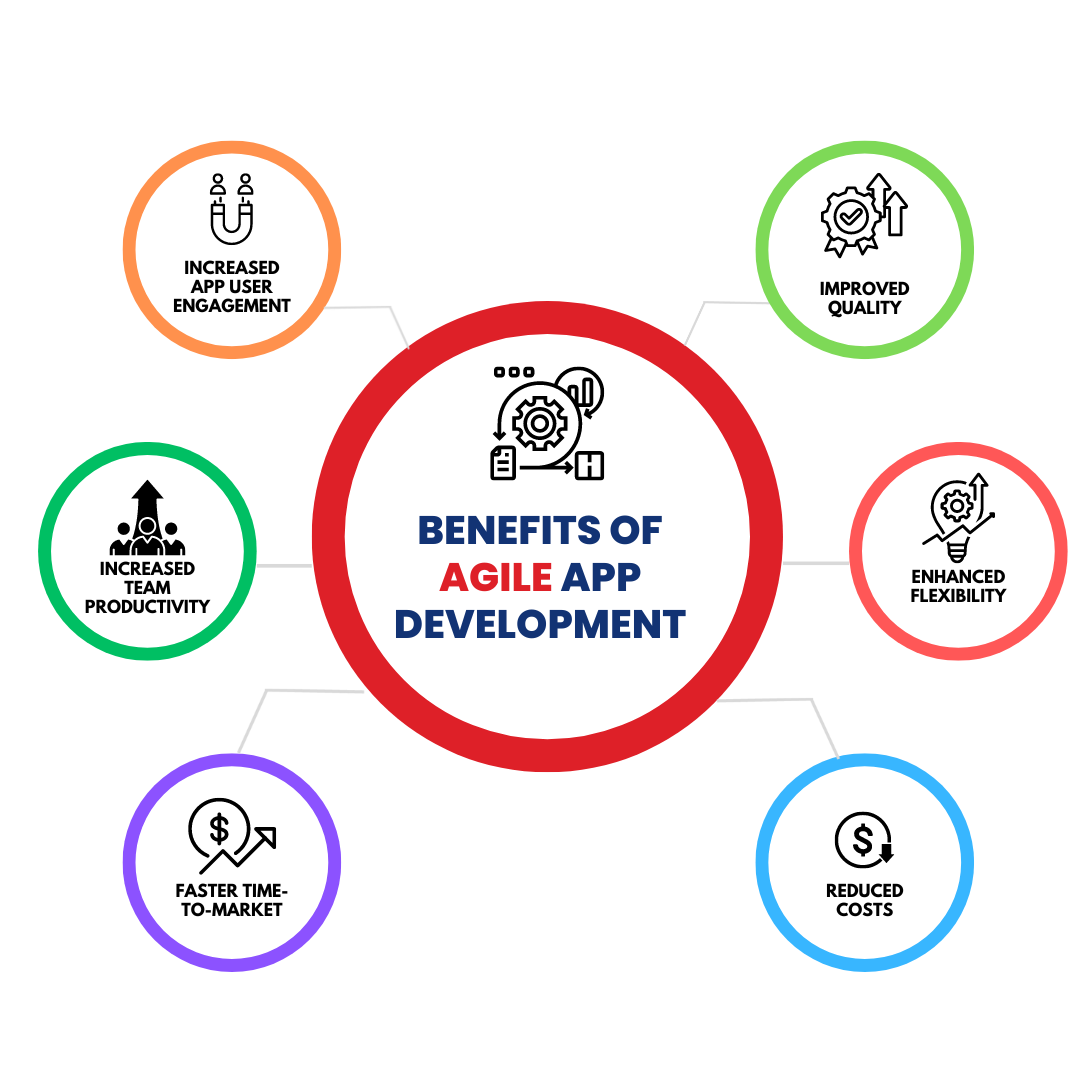
While Agile offers a multitude of advantages for software development in general, it holds particular strengths when applied to mobile app development. Here are how Agile methodology for app development can be beneficial:
- Faster Time-to-Market: Agile’s iterative nature allows for the development of a Minimum Viable Product (MVP) quickly. This MVP can be released to a limited audience early on, gathering valuable user feedback that can be incorporated into subsequent iterations, ultimately accelerating the path to a market-ready app. A report by PwC indicates that Agile projects deliver applications 30% faster on average compared to traditional approaches.
- Enhanced Flexibility: Market needs and user preferences can change rapidly. Agile’s emphasis on adaptability allows development teams to easily pivot and incorporate these changes into the development process, ensuring the app remains relevant and competitive.
- Improved Quality: Agile’s focus on continuous testing and feedback loops helps identify and address bugs and usability issues early on. This leads to a higher quality final product that meets user expectations.
- Reduced Costs: According to McKinsey & Company, companies that adopt Agile methodologies experience a 10-40% reduction in project costs. Traditional development methodologies often need more scope creep, leading to budget overruns. Agile’s iterative approach allows for better cost control as features are prioritized and delivered incrementally.
- Increased Team Productivity: Agile empowers teams to work efficiently and proactively identify potential roadblocks by fostering a collaborative environment with clear communication channels.
- Increased App User Engagement: Studies by VersionOne show that Agile teams deliver apps with 21.3% higher user engagement compared to traditional waterfall methodologies.
Benefits of Agile App Development For Business Owners
As business owners, we need to understand the importance of cost-effective solutions. When it comes to mobile apps, we need to create a mobile app that users will love without dealing with slow development. Agile is a lifesaver here. It helps you divide development into manageable parts, prioritizing key features for your target audience.
This Agile app development approach enables you to launch your app quicker, gather early user feedback, and avoid expensive setbacks. It’s like building your app one step at a time, with users leading the way. Agile keeps you focused and efficient, resulting in a successful app that addresses real user needs.
Benefits of Agile App Development For Project Managers
For project managers who tend to feel overwhelmed by mobile app development, Agile might be your answer. By using Agile methodologies, you will be able to deliver exceptional apps, keep your team engaged, and keep projects on track. Agile prioritizes user value, breaks down development into manageable sprints, fosters collaboration and clear communication, and equips you with tools to improve based on user feedback continuously.
Agile app development fosters open communication, faster issue resolution, and smoother development. It offers flexibility through continuous user feedback and testing, allowing you to adapt to changing market trends and user preferences.
How Trello and Spotify Thrived with Agile Development
Data tells a compelling story, but real-world examples bring it to life. Let’s explore how two industry leaders, Trello and Spotify, capitalized on Agile methodologies to achieve remarkable success using Agile app development:
Trello

Trello, a popular project management tool, embraced Agile to streamline their own Agile app development process. Here’s how Agile empowered them:
- Kanban Power: Trello utilized Kanban boards for superior task visualization. This transparency facilitated better team collaboration and progress tracking.
- User Feedback as Fuel: Trello prioritized user feedback throughout the development process. This allowed them to refine their app, leading to continuous:
- 2x Faster Feature Delivery: Trello doubled the speed of introducing new features, keeping their users engaged and excited.
- Improved User Satisfaction: By incorporating user feedback, Trello significantly improved user satisfaction scores, a key metric for app success.
Spotify

Spotify, the world’s leading music streaming platform, credits Agile app development for its continuous innovation and ability to adapt to evolving user preferences. Let’s see how Agile fueled Spotify’s growth:
- Scrum Sprints for Speed: Spotify adopted Scrum, an Agile framework that utilizes short development sprints. This enabled them to:
- Rapid Feature Updates: We release new features and bug fixes weekly, ensuring a fresh and engaging user experience.
- User Testing Drives Improvement: Spotify actively integrates user testing within their Agile sprints. This allows them to identify and address user pain points quickly, leading to:
- Enhanced User Experience: Continuously refine features based on user feedback, resulting in a highly engaging and user-centric app experience.
The takeaway? Agile methodologies are not just a theoretical concept. Trello and Spotify’s success stories demonstrate the tangible benefits Agile can deliver for mobile app development. Embrace Agile, prioritize user feedback, and experience the power of continuous improvement!
Agile Methodologies
While “Agile” is an umbrella term, there are several popular Agile frameworks used in mobile development, each with its unique characteristics:
- Scrum: A popular choice, Scrum utilizes short, time-boxed development cycles called Sprints. Each Sprint focuses on delivering a specific set of features from a prioritized product backlog. Daily stand-up meetings and sprint reviews keep everyone aligned and ensure progress.
- Kanban: This visual approach utilizes a Kanban board to track the progress of tasks through different stages, such as “To Do,” “In Progress,” and “Done.” Kanban is known for its simplicity and emphasis on a continuous flow of work.
- Extreme Programming (XP): XP is a more prescriptive methodology that emphasizes close collaboration between developers and customers. It promotes practices like pair programming, test-driven development, and continuous integration to ensure high-quality, maintainable code.
The best Agile framework for your mobile project will depend on your specific needs and team preferences.
Kanban Success Story: Evernote’s Agile App Development
Now that we have explored Agile Methodologies, Here is a case study highlighting Kanban’s success in mobile app development:

Evernote adopted the Kanban framework to optimize task management for their mobile app development team. They created a digital Kanban board with dedicated columns representing different development stages, established WIP limits, and held regular team meetings to analyze the board and continuously improve their development process. The results included increased efficiency, improved collaboration, faster feature delivery, and enhanced team morale.
Best Practices for Agile Mobile App Development
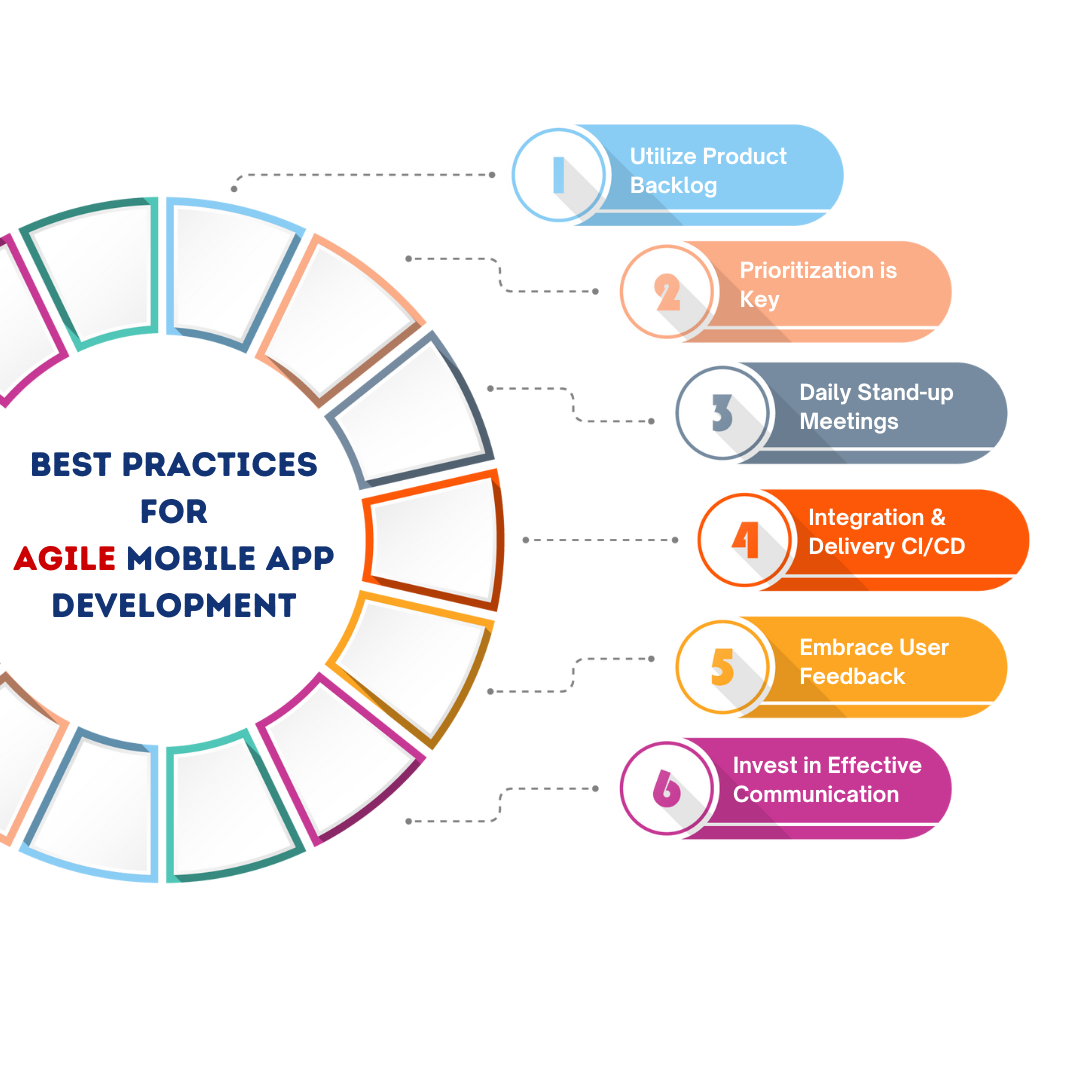 Agile app development is an iterative, user-centric approach that lets us developers stay agile, responsive, and focused on delivering real value. But how do you make Agile truly sing in the mobile app development world? Here are some best practices, infused with my own experiences as a developer, to help you create high-quality, user-loving mobile apps:
1. Utilize Product Backlog (and Keep it Living):
The product backlog is a prioritized list of features and functionalities for your app, constantly evolving based on user feedback and market trends. I treat the backlog like a living document. After each sprint (a short development cycle in Agile), we review the backlog with a fresh perspective, incorporating user feedback from testing or app store reviews. This ensures we’re always working on the features that matter most to users.
For example, during the Agile app development of a fitness app, user feedback revealed a strong desire for a community forum. While this feature wasn’t originally in the backlog, we were able to add it quickly based on user input. This kept our app relevant and boosted user engagement.
2. Prioritization is Key (think User Value, Not Just Cool Features)
Not all features are created equal. In Agile, we use techniques like user story mapping and effort estimation to prioritize features within the backlog. This ensures we deliver the most valuable functionalities first. Here’s the developer’s secret weapon: think user value, not just cool features.
During the Agile app development of a language learning app, we had a backlog item for a fancy 3D animated mascot. It looked great, but user stories revealed a stronger need for improved offline functionality. By prioritizing offline access, we ensured the app was usable in any situation, directly impacting user experience and value.
3. Daily Stand-up Meetings: Keep Everyone in Sync (and Avoid Information Silos)
Daily stand-up meetings are short, focused huddles where team members share progress, identify roadblocks and stay aligned on daily goals. These are lifesavers for developers. They prevent information silos and ensure everyone is on the same page.
In a recent project, a developer ran into a critical bug but hesitated to raise it due to a tight deadline. The daily stand-up meeting caught the issue early, allowing the team to collaborate and fix it before it impacted the entire sprint.
4. Continuous Integration and Delivery (CI/CD):
Continuous Integration and Delivery (CI/CD) is a cornerstone of Agile mobile app development. It might sound complex, but at its core, it’s about automating the boring stuff (manual testing and deployment) so developers can focus on the exciting stuff (building innovative features). Let’s break it down and see how it transformed my workflow:
The Manual Testing Grind
Before CI/CD, testing was a manual slog. Every time I made a code change, I had to test it to ensure everything worked as expected meticulously. This was not only time-consuming but also prone to human error. Imagine missing a critical bug because you were rushing through a repetitive testing process!
Deploying code to production was another hurdle. It involved complex configurations and a high risk of introducing bugs. If one wrong move is made, the entire app could come crashing down! This constant pressure added unnecessary stress to the development process.
CI/CD revolutionized my development experience. Here’s how it works:
- Continuous Integration: Every time a developer commits code changes to the central repository, an automated testing suite kicks in. These tests cover various functionalities of the app, ensuring the new code doesn’t break existing features. Think of it as a safety net that catches bugs early on before they cause any damage.
- Continuous Delivery: Once the code passes all the tests, CI/CD can automate the deployment process. This involves packaging the code, configuring the environment, and pushing it to various stages (testing, staging, production) depending on the setup. It’s like having a tireless assistant who handles all the deployment logistics, freeing me to focus on writing code.
The Benefits for Developers
The impact of CI/CD goes beyond just automation. Here’s what I, as a developer, truly appreciate:
- Faster Development Cycles: By automating testing and deployment, CI/CD significantly reduces development time. This allows us to push features and updates to users faster, keeping the app fresh and competitive.
- Improved Code Quality: The constant feedback loop from automated tests helps us identify and fix bugs early in the development cycle. This leads to a higher overall code quality and a more stable app.
- Reduced Stress and Increased Focus: No more manual testing marathons or deployment anxiety. CI/CD takes care of the mundane tasks, allowing developers to focus on what they do best – creatively solving problems and building innovative features.
Let’s revisit the fitness Agile app development example from before. Imagine we’re adding a new workout tracking feature. With CI/CD, every time a developer commits code related to this feature, automated tests ensure it functions correctly. Once the tests pass, CI/CD can automatically deploy the code to a testing environment, where we can further refine the feature before pushing it to production. The streamlined Agile app development process allows us to deliver new features with confidence and speed.
5. Embrace User Feedback (They’re the Real Testers)
Utilize various methods like user testing and beta programs to gather continuous feedback and iterate on the app. Remember, users are your real-world testers. Imagine developing an app in a vacuum, with no input from the very people who will be using it. The result? An app that might look great on paper but fails to resonate with users.
Here’s the truth: your users are your real-world testers. They provide invaluable insights into how your app functions in the real world, helping you identify usability issues, prioritize features, and ensure your app delivers a truly exceptional user experience.
Methods for Gathering User Feedback
Agile app development offers a variety of methods to capture user feedback throughout the development process:
- User Testing: This involves inviting potential users to interact with the app in a controlled environment. Observe their behavior, listen to their feedback, and identify areas for improvement.
- Beta Programs: Release a pre-release version of your app to a limited group of users. Gather feedback through surveys, in-app feedback mechanisms, and user interviews.
- App Store Reviews: Once your app is live, pay close attention to user reviews on the App Store or Google Play Store. These reviews offer a wealth of insights into user pain points and feature requests.
The Feedback Loop in Action
Let’s use a social media app example to illustrate the power of the user feedback loop in Agile mobile app development:
- Initial Development: Based on market research and competitor analysis, you develop a core set of features for your social media app.
- User Testing: During user testing, you observe common user behaviors and identify areas for improvement. For example, users might find the onboarding process confusing or struggle to discover key functionalities.
- Iteration Based on Feedback: Based on user testing feedback, you iterate on the app, streamlining the onboarding process and improving feature discoverability.
- Beta Program: The improved app is released to a beta group. Beta testers might suggest additional features not originally considered, such as the ability to create private groups.
- Further Iteration: Based on beta program feedback, you prioritize developing private group functionality, further enhancing the user experience.
- App Store Release and Continuous Feedback: The app is released on the App Store. You continue to monitor user reviews and actively gather feedback to fuel future iterations and improvements.
The user feedback loop in Agile mobile app development is not a one-time event. It’s a continuous process that ensures your app evolves alongside your users’ needs. By embracing user feedback and actively incorporating it into your development process, you can build mobile apps that are not just functional but truly user-centric and successful in the long run.
6. Invest in Effective Communication (Transparency is Key)
Clear and open communication is crucial for Agile success. Encourage regular communication between developers, product owners, stakeholders, and users. Transparency is key.
During a past project, we faced an issue where the app’s user interface was not consistent due to a lack of communication between designers and developers. The designers had one vision for the app, while the developers had a different understanding of how the app should look and function. This led to several inconsistencies in the app’s interface, making it challenging for users to navigate and causing frustration.
To address this issue, we took several steps to improve communication between the designers and developers. We established clear communication channels, such as regular team meetings and a dedicated chat channel, to ensure everyone was on the same page and any issues were addressed promptly. We also created a design system that outlined the app’s design principles, including typography, color palette, and layout. This allowed the designers and developers to work together more efficiently and ensured that all design elements were consistent across the app.
By implementing these changes, we were able to streamline collaboration and ensure a cohesive user experience through Agile app development. The app’s interface became more consistent, making it easier for users to navigate and understand its features. This, in turn, led to increased user satisfaction and engagement with the app.
Agility’s Potential for Your Mobile App Success
This blog post has comprehensively explored agile app development with the core principles of Agile, its undeniable benefits for both business owners and project managers, and practical best practices to ensure successful implementation.
Here’s a quick recap of the key takeaways in Agile app development:
- Faster Time-to-Market & Reduced Costs: Launch your app quicker, gather valuable user feedback early, and avoid expensive development detours with Agile’s iterative approach.
- Enhanced Flexibility & User-Centricity: Adapt to changing market trends and user preferences seamlessly with Agile methodologies. Prioritize features that deliver the most value to users, ensuring your app remains relevant and successful.
- Improved Team Productivity & Streamlined Communication: Agile fosters collaboration and promotes open communication channels, keeping everyone aligned and boosting team morale.
By embracing Agile best practices like:
- Prioritizing user feedback through testing and A/B testing
- Utilizing product backlogs and focusing on high-value features
- Leveraging CI/CD for automated testing and deployment
- Maintaining clear and transparent communication among all stakeholders
You can use Agile app development to create great mobile apps that users love, and that help your business succeed. With Agile, you can keep learning and improving your app to make sure it stays valuable in the always-changing mobile world.
Integrate these valuable insights and best practices to create a winning app development strategy. Remember, Agile app development is an iterative process – be prepared to learn, adapt, and continuously improve as you navigate the exciting world of mobile app development!
TechnBrains Agile App Development Approach: Core Principles for Mobile App Success
At TechnBrains, we capitalize on Agile methodologies to deliver exceptional mobile apps efficiently. While various Agile frameworks exist, we prioritize these core principles to ensure a smooth, user-centric development process:
- Collaborative Iteration: We use iterative development cycles, known as sprints, to deliver core functionalities early and gather valuable user feedback. This ensures we build features that resonate with your target audience for a successful app.
- Transparency & Communication: We involve you at every stage, sharing progress and functionalities for your input. This collaborative approach ensures we’re on the same page and building the app you envision.
- Flexibility & Adaptability: We understand that your needs might evolve during development. Our Agile approach is designed to be flexible. We can adapt development priorities based on your feedback or new market trends, ensuring your app stays relevant and competitive.
- Focus on Value & Efficiency: Agile methodologies help us manage time effectively by prioritizing tasks and functionalities that deliver the most value to our users. This ensures we stay on schedule and provide a high-quality app within budget.
TechnBrains ensures your mobile app development journey is efficient and collaborative and delivers exceptional results. So what are you waiting for? Schedule a free consultation with our experts now!
In This Article

Blocked by Backlog or Missed Deadlines?
Senior developers who build, fix, and ship, without slowing your team down.