Build and Scale Faster
150+ products shipped for startups and enterprises by engineers focused on real outcomes.
"Their ability to quickly understand an unfamiliar use case and respond creatively to it is impressive."

Anonymous
Executive, Pured Disc Golf

"TechnBrains resolved challenges efficiently and turned my vision into a solid, functional product with a strong foundation."

Jalen Gibbs
Founder, STREAMLINE LIVE
"The talent they provided was solid, but more importantly, they were quick to align with our way of working."

Nancy Snyder
Managing Director, MimeCast
Our trusted clients


Start Your Product Journey Today
Turn your idea into a working product. Share a few details and we'll help define the roadmap, timeline, and execution approach.
Automotive Software Development Guide for 2024
The Automotive Software Development industry is undergoing a revolution driven by rapid technological advancements. Its projected compound annual growth rate (CAGR) is 14.6% from 2024 to 2032. From autonomous driving and cloud computing to electric vehicles, machine learning, and advanced connectivity, the industry is embracing innovation at an unprecedented pace. Advanced software solutions power the growing number of electric vehicles...


Updated Jun 07, 2024
The Automotive Software Development industry is undergoing a revolution driven by rapid technological advancements. Its projected compound annual growth rate (CAGR) is 14.6% from 2024 to 2032.
From autonomous driving and cloud computing to electric vehicles, machine learning, and advanced connectivity, the industry is embracing innovation at an unprecedented pace. Advanced software solutions power the growing number of electric vehicles on the road, the emergence of virtual showrooms, and access to advantageous financing options.
Manufacturers and suppliers are increasingly turning to automotive software development services to integrate digital transformation across all operational processes – from product design and production to sales and marketing.
The rise of advanced driver-assistance systems (ADAS), engaging entertainment systems, and seamless vehicle connectivity features have all been made possible through advancements in automotive software development. These innovations have significantly transformed the customer experience, prioritizing safety, comfort, and convenience.
This guide explores automotive software development in 2024, highlighting the process, key trends, best practices, and considerations for successfully navigating the road ahead.
Automotive Software
Automotive software refers to a wide range of software applications and systems utilized in modern vehicles. These software applications are essential for ensuring the proper functionality, safety, and performance of cars, trucks, and other motor vehicles.
Automotive software development is the process of designing, developing, and deploying software systems for vehicles such as cars and trucks. Modern vehicles rely heavily on advanced software to elevate the driving experience and provide essential assistance to drivers. From maintaining optimal temperature to ensuring navigation and safety features, the software also enables real-time diagnostics and seamless over-the-air updates.
Automotive Software Development Process
The automotive software development process has 6 steps:
- Requirements Gathering and Analysis
- Design and Architecture
- Automotive Software Development and Coding
- Verification and Validation
- Integration and Deployment
- Maintenance and Updates
Here’s a detailed breakdown of the key stages involved:
1. Requirements Gathering and Analysis
This initial stage involves meticulously defining the functionalities and features when going for custom software development for the automotive industry. This requires in-depth collaboration between developers, engineers, project managers, and potentially even end-users. Key considerations include:
- User Needs: What functionalities will enhance the driving experience and cater to user expectations?
- Safety Regulations: The software must comply with strict safety regulations set forth by governing bodies.
- System Constraints: Considering limitations of hardware resources, power consumption, and real-time performance requirements.
2. Design and Architecture
Software architects define the overall system architecture. This involves outlining the interaction between different software components and the hardware they control. Here, decisions are made on:
- Modular Design: Breaking down the software into smaller, manageable modules that can be developed and tested independently.
- Communication Protocols: Defining how different software components will communicate with each other and with the vehicle’s hardware.
- Security Architecture: Building robust security measures into the system from the ground up to protect against cyberattacks.
3. Automotive Software Development And Coding
Skilled developers write code using specialized programming languages like C++, Python, or Java, adhering to coding standards and best practices. Common activities include:
- Unit Testing: Testing individual software modules to ensure they function as intended in isolation.
- Code Reviews: Senior developers review code written by others to identify potential errors and ensure code quality.
- Version Control: Using tools like Git to track changes, manage different versions of the code, and facilitate collaboration.
The demand for skilled automotive software developers is rapidly growing. Consider upskilling existing teams or collaborating with an automotive software development company.
4. Verification and Validation (V&V)
This crucial stage involves rigorous testing to ensure the automotive software performs as intended, meets safety requirements, and identifies and eliminates bugs before deployment. It consists of:
- Verification: Ensuring the software is built according to the defined specifications.
- Validation: Confirming the software actually meets the intended needs and functionalities of the vehicle.
- Hardware-in-the-Loop (HIL) Testing: Testing the software on simulated or real car hardware to assess its interaction with physical components.
5. Integration and Deployment
The developed software is integrated with the vehicle’s hardware and other software components. This involves:
- Calibration: Fine-tuning software parameters to ensure optimal performance with specific hardware components.
- Flashing: Transferring the final software code onto the vehicle’s electronic control units (ECUs).
6. Maintenance and Updates
Automotive Software updates and bug fixes are crucial throughout the vehicle’s lifecycle to maintain functionality, address evolving security threats, and potentially introduce new features. This involves:
- Over-the-Air (OTA) Updates: Modern vehicles allow software updates to be delivered wirelessly, improving efficiency and user convenience.
- Continuous Monitoring: Monitoring software performance in real-world scenarios to identify potential issues and areas for improvement.
Programming Languages For Automotive Software Development
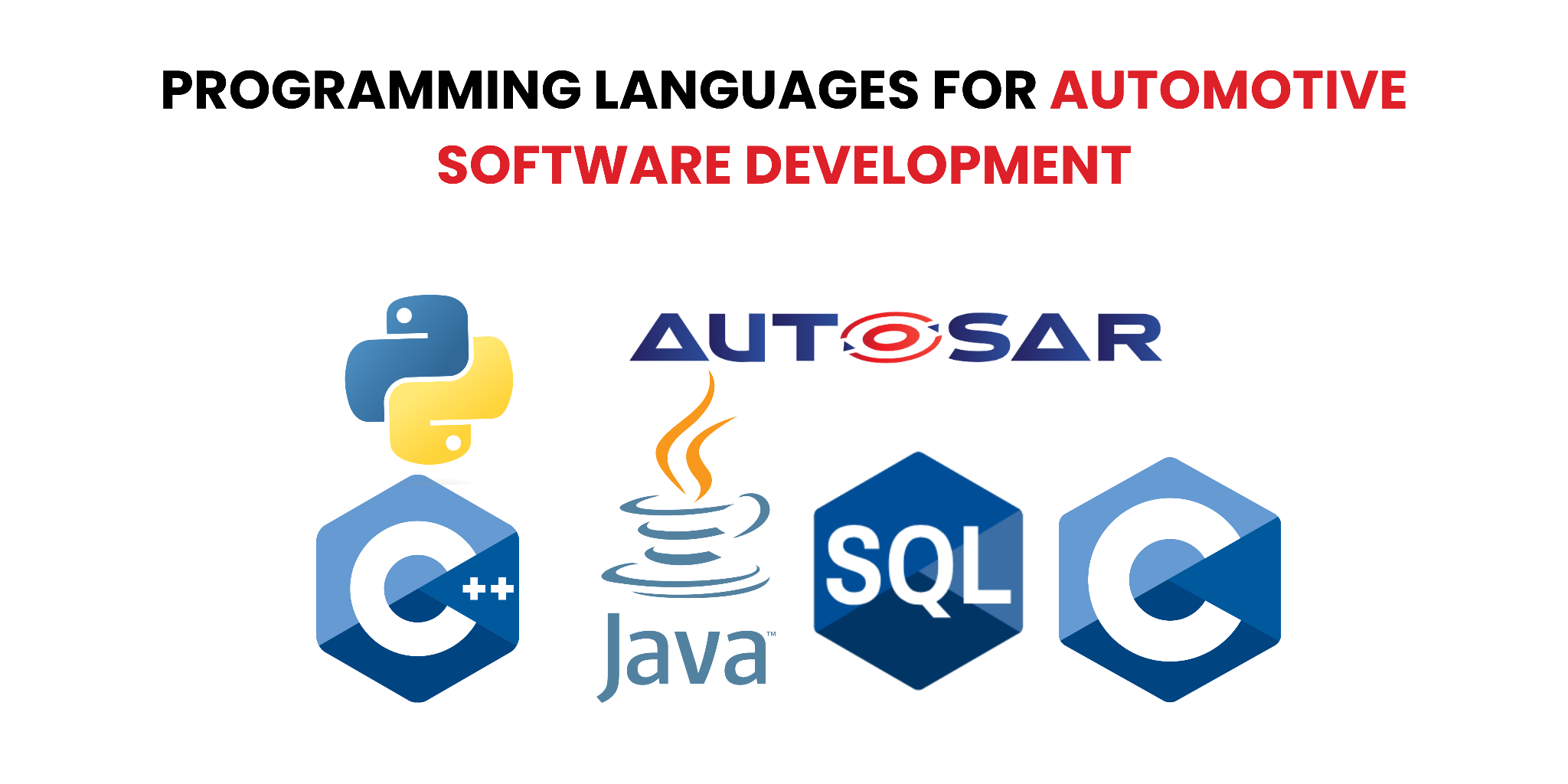
In automotive software development, developers can use several programming languages. However, two of them are the most common programming languages used in automotive software development: C/C++ and AUTOSAR. Below is why you should use them:
C/C++
These languages are efficiency champions, perfectly suited for resource-limited car systems. Developers have fine-grained control, allowing them to optimize performance and directly interact with car parts like brakes and engines. Their real-time prowess ensures lightning-fast responses, which is critical for safety systems.
AUTOSAR (AUTomotive Open System Architecture)
AUTOSAR isn’t a single language but a standardized framework built specifically for Automotive Software Development. It leverages C/C++ for core functions but offers key advantages:
- Code Sharing: AUTOSAR allows developers to reuse code across different car models, saving time and money.
- Streamlined Development: Standardization simplifies the process, boosting reliability and safety. Imagine multiple teams working on a complex car; AUTOSAR ensures everything fits together smoothly.
- Safety First: AUTOSAR prioritizes safety, providing features and guidelines for building secure automotive software.
Other Languages
While C/C++ and AUTOSAR dominate, other languages might play a role depending on the specific application:
- Python: Used for prototyping, scripting, and data analysis tasks.
- Java: Sometimes employed for in-vehicle infotainment systems due to its platform independence.
- SQL: For managing databases used in car software systems.
The choice of programming language in automotive software development depends on factors like specific functionality, performance requirements, and integration with existing systems.
Why go for automotive software development in 2024?
The automotive software development industry has a rich history, and the year 2024 is poised to be a groundbreaking year. Let us take a closer look at the key areas that are currently drawing increased attention:
The Rise of Electric Vehicles (EVs)
The electric revolution is in full swing, and with it comes the demand for custom software development specifically tailored to electric powertrains, battery management systems, and the ever-expanding charging infrastructure.
For developers, familiarize yourself with programming languages like AUTOSAR (AUTomotive Open System Architecture), specifically designed for EV software development. Deepen your understanding of battery management systems (BMS) and the software needed to optimize battery performance, range, and safety.
Cybersecurity Imperative
As software becomes more deeply integrated into every aspect of a vehicle, the risk of cyberattacks rises. Businesses are also prioritizing Top Cybersecurity Services for Robust security measures and strict adherence to stringent standards like ISO 21434 for Automotive Software Development.
To emphasize the importance of security in custom software development, implement secure coding practices such as static code analysis and penetration testing to identify and eliminate vulnerabilities early in the development process.
The Connected Car Experience
Imagine a seamless flow of information between your car, smartphone, and the surrounding infrastructure. This connected car experience is becoming the norm, and developers need to prioritize user experience, data security, and real-time communication within car infotainment systems.
When developing car infotainment systems, prioritize user experience (UX) design principles. Ensure intuitive interfaces, minimize driver distraction, and prioritize seamless connectivity with smartphones and other devices. You can also capitalize on cloud computing platforms to enable real-time data processing, software updates over the air (OTA), and personalized in-vehicle experiences.
The Advent of Autonomous Driving
Fully autonomous vehicles might still be a few years away, but advanced driver-assistance systems (ADAS) are rapidly evolving in automotive software development. This demands sophisticated software development practices to ensure their safe and reliable operation.
Benefits of Automotive Software Development
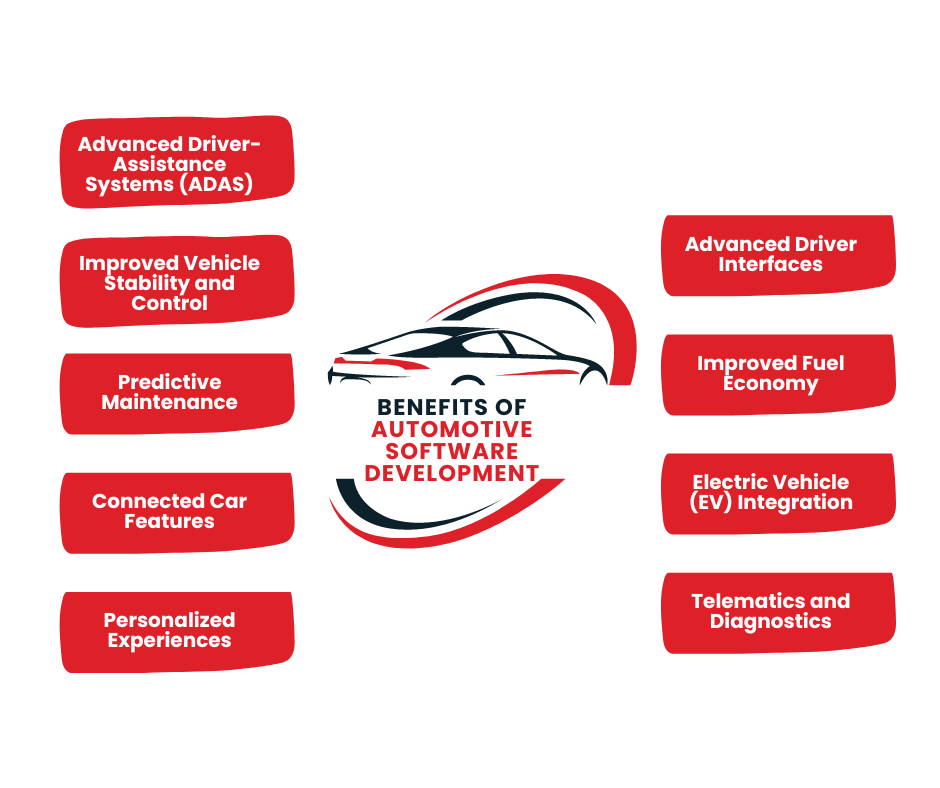
Cars are no longer just machines that get us from point A to point B; they’re rapidly evolving into sophisticated, software-driven experiences. Let’s explore some of the key advantages of automotive software development:
- Advanced Driver-Assistance Systems (ADAS): Software empowers features like automatic emergency braking, lane departure warning, and adaptive cruise control, significantly reducing accidents and fatalities on the road.
- Improved Vehicle Stability and Control: Sophisticated software algorithms can optimize engine performance, traction control, and electronic stability control, leading to a smoother and safer driving experience.
- Predictive Maintenance: By analyzing sensor data, the software can predict potential malfunctions and alert drivers in advance, preventing breakdowns and ensuring timely repairs.
- Connected Car Features: Seamless integration of smartphones and in-vehicle infotainment systems allows for real-time traffic updates, navigation, and entertainment options, making every journey more convenient and enjoyable.
- Personalized Experiences: Software can personalize settings like climate control, seat adjustments, and even music preferences based on driver profiles, creating a truly customized in-car environment.
- Advanced Driver Interfaces: Intuitive dashboards and user interfaces powered by software simplify interaction with the vehicle’s various features, minimizing driver distraction and maximizing comfort.
- Improved Fuel Economy: Software optimization of engine performance and transmission control can lead to significant reductions in fuel consumption and emissions, contributing to a greener and more sustainable future.
- Electric Vehicle (EV) Integration: The rise of EVs demands innovative software solutions specifically tailored to battery management systems, charging infrastructure, and efficient energy utilization.
- Telematics and Diagnostics: Software that analyzes real-time data can help identify areas for improvement in driving habits and optimize vehicle performance, leading to better fuel efficiency and reduced environmental impact.
By automotive software development, the industry is paving the way for a safer, more connected, and sustainable future of transportation. This software revolution is transforming the driving experience for everyone.
Best Practices for Automotive Software Development in 2024
As an automotive software developer, you’re at the forefront of this exciting transformation. But with great power comes great responsibility! Here are some best practices to ensure your automotive software development projects are successful, safe, and deliver real value to users:
Your Competitive Edge
Agile development methodologies allow you to break down large projects into smaller, more manageable tasks. This iterative approach enables you to:
- Respond Quickly to Change: New technologies and consumer preferences emerge constantly. Agile development allows you to adapt your software features and functionalities quickly, keeping your project at the forefront of innovation.
- Deliver Value Early and Often: By focusing on delivering working functionalities in short sprints, you can get user feedback early and continuously improve your software. This ensures the final product truly meets the needs of drivers and passengers.
- Reduce Risk and Waste: Agile development minimizes the risk of building features that nobody wants. By constantly testing and iterating, you avoid wasting valuable time and resources on functionalities that don’t resonate with users.
- The Rapid Application Development (RAD) Advantage: Consider incorporating Rapid Application Development (RAD) principles within your agile framework. RAD emphasizes prototyping and user feedback even further
Your Moral Imperative
Safety is paramount in automotive software development. A single line of faulty code can have catastrophic consequences. Here’s how to prioritize functional safety:
- Stringent Development Processes: Implement rigorous development processes that emphasize code quality, testing, and verification. Every line of code must be scrutinized to ensure it performs as intended under all circumstances.
- Rigorous Testing: Don’t leave anything to chance. Employ comprehensive testing methodologies to identify and eliminate bugs before the software goes live. This includes unit testing, integration testing, and real-world scenario simulations.
- Focus on Reliability: Your software should be dependable and perform consistently. Utilize robust coding practices and error-handling mechanisms to minimize the risk of software failures that could compromise safety.
Utilize the Power of Version Control
Modern automotive software development projects are often complex and involve multiple developers working on different parts of the code. Version control systems like Git are essential tools for:
- Code Traceability: Imagine accidentally introducing a bug – with Git, you can easily track changes made to the code and revert to a previous version if needed. This ensures a clear history of development and simplifies troubleshooting.
- Collaboration: Multiple developers can work on the same project simultaneously without stepping on each other’s toes. Git keeps track of individual contributions and merges changes seamlessly, fostering efficient teamwork.
- Efficient Management: Version control systems allow you to organize different versions of your software code, making it easy to compare changes, revert to previous versions, and manage complex projects with ease.
Automation Tools
The days of manual testing are fading. Modern automotive software development relies heavily on automation tools to streamline the process and improve code quality. Here’s what automation can offer:
- Automated Testing Frameworks: Develop automated test scripts that can be run repeatedly to ensure software functionality remains consistent with every code change. This saves you time and effort while catching bugs early in the development cycle.
- Continuous Integration/Continuous Delivery (CI/CD) Pipelines: Automate the process of integrating code changes, testing them, and deploying the software to testing environments. This facilitates faster development cycles and ensures the code you’re working on is always ready for the next stage.
- Improved Code Quality: By automating repetitive tasks, developers are free to focus on writing clean, maintainable code. Automation tools also help identify and eliminate potential issues early on, leading to a more robust and reliable final product.
Applying the V-Model in Automotive Software Development
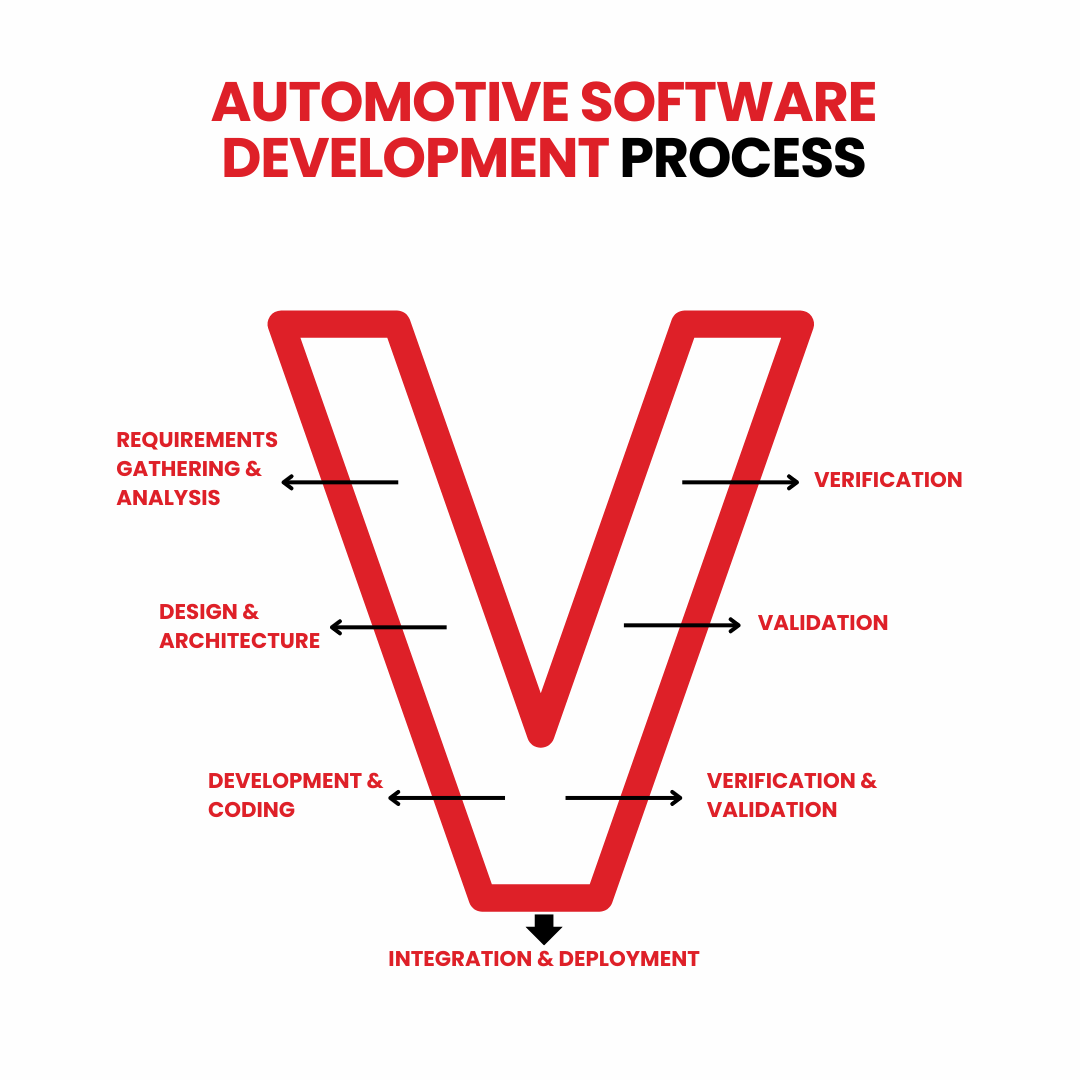
The V-Model development process is also a popular choice for the automotive industry due to its emphasis on rigorous testing and safety. Here’s a breakdown of how the V-Model is applied in automotive software development:
Left Side: Development Phases
- Requirements Gathering and Analysis: This initial stage involves meticulously defining the functionalities and features of the automotive software. It requires in-depth collaboration between developers, engineers, project managers, and potentially even end-users.
- Design and Architecture: Software architects define the overall system architecture. This involves outlining the interaction between different software components and the hardware they control. Here, decisions are made on:
- Modular Design: Breaking down the software into smaller, manageable modules that can be developed and tested independently.
- Communication Protocols: Defining how different software components will communicate with each other and with the vehicle’s hardware.
- Security Architecture: Building robust security measures into the system from the ground up to protect against cyberattacks.
- Automotive Software Development and Coding: Skilled developers write code using specialized programming languages like C++, Python, or Java, adhering to coding standards and best practices. Common activities include:
- Unit Testing: Testing individual software modules to ensure they function as intended in isolation.
- Code Reviews: Senior developers review code written by others to identify potential errors and ensure code quality.
- Version Control: Using tools like Git to track changes, manage different versions of the code, and facilitate collaboration.
Right Side: Verification and Validation Phases
4. Verification and Validation (V&V): This crucial stage involves rigorous testing to ensure the automotive software performs as intended, meets safety requirements, and identifies and eliminates bugs before deployment. It consists of:
-
- Verification: Ensuring the software is built according to the defined specifications in the requirements gathering stage.
- Validation: Confirming the software actually meets the intended needs and functionalities for the vehicle as outlined in the initial analysis.
- Hardware-in-the-Loop (HIL) Testing: Testing the software on simulated or real car hardware to assess its interaction with physical components. This allows for a more realistic evaluation of the software’s performance.
Integration and Deployment (Bottom of the V):
5. Integration and Deployment: The developed software is integrated with the vehicle’s hardware and other software components. This involves:
-
- Calibration: Fine-tuning software parameters to ensure optimal performance with specific hardware components.
- Flashing: Transferring the final software code onto the vehicle’s electronic control units (ECUs). This essentially “programs” the car with the new software.
The V-Model remains a valuable approach for automotive software development due to its emphasis on safety and rigorous testing. While some limitations exist, the V-model can be a powerful tool for ensuring the development of high-quality and reliable software for modern vehicles.
The Road Ahead for Automotive Software Development
The automotive industry is undergoing a digital transformation fueled by advancements in software development. This guide provided a comprehensive overview of the landscape in 2024, highlighting key trends, best practices, and the exciting possibilities that lie ahead. From the rise of electric vehicles to the increasing importance of cybersecurity and the connected car experience, automotive software development is shaping the future of transportation. By embracing innovation and prioritizing safety, developers have the power to create a world where cars are not just machines but intelligent companions that enhance our driving experience, ensure our safety, and contribute to a more sustainable future.
TechnBrains: Your Trusted Partner in Automotive Software Development
Now that you’ve gained a deeper understanding of automotive software development, you might wonder where to turn to bring your innovative ideas to life. Look no further than TechnBrains! We are a leading automotive software development company with a proven track record of success. Our team of skilled and experienced developers is passionate about creating cutting-edge solutions that push the boundaries of what’s possible.
Whether you’re developing advanced driver-assistance systems, crafting intuitive in-vehicle experiences, or optimizing electric vehicle performance, TechnBrains has the expertise and resources to help you achieve your goals. We partner closely with our clients to understand their unique needs and develop custom software solutions that deliver real value.
Contact TechnBrains today, and let’s shape the future of automotive software development together!
FAQs
What is an automotive software developer?
Automotive software engineering involves designing and developing software solutions and systems for car technology.
What type of software development is used in the automotive industry?
Java is commonly used to develop software for automotive infotainment systems and telematics, while Python is employed for data analysis and machine learning in automotive software development.
What software is used in automotive?
CAD software enables engineers to sketch, modify, and visualize their designs, while CAE software allows them to simulate and evaluate the performance, durability, safety, and efficiency of their designs. Some popular CAD and CAE software used in automotive engineering include SolidWorks, CATIA, AutoCAD, ANSYS, and MATLAB.
What programming language is used for cars?
C and C++ are the most widely used programming languages in the automotive industry. The Motor Industry Software Reliability Association has developed MISRA C guidelines to promote safety best practices for automotive software.
In This Article

Blocked by Backlog or Missed Deadlines?
Senior developers who build, fix, and ship, without slowing your team down.