Build and Scale Faster
150+ products shipped for startups and enterprises by engineers focused on real outcomes.
"Their ability to quickly understand an unfamiliar use case and respond creatively to it is impressive."

Anonymous
Executive, Pured Disc Golf

"TechnBrains resolved challenges efficiently and turned my vision into a solid, functional product with a strong foundation."

Jalen Gibbs
Founder, STREAMLINE LIVE
"The talent they provided was solid, but more importantly, they were quick to align with our way of working."

Nancy Snyder
Managing Director, MimeCast
Our trusted clients


Start Your Product Journey Today
Turn your idea into a working product. Share a few details and we'll help define the roadmap, timeline, and execution approach.
Why Startups Should Choose Cross-Platform App Development in 2025
In 2025, mobile-first is no longer a choice, it’s a critical business strategy. For startups aiming to reach audiences from multiple platforms cost-efficiently yet quickly, cross-platform app development allows direct market traction without the need for investing into individual native apps for each platform. Not sure what cross-platform app development is? It’s a unique development approach that allows you to...


Updated Jul 01, 2025
In 2025, mobile-first is no longer a choice, it’s a critical business strategy. For startups aiming to reach audiences from multiple platforms cost-efficiently yet quickly, cross-platform app development allows direct market traction without the need for investing into individual native apps for each platform.
Not sure what cross-platform app development is? It’s a unique development approach that allows you to launch a mobile application across multiple platforms with a single, unified code. Cross-platform app development for startups means lower costs, quicker launches and consistent performance across devices.
With global mobile app revenue estimated to hit a huge $613 billion by the end of 2025, startups cannot afford to overspend on soiled development nor wait for the long-stretched development timelines. Cross-platform apps are suited best for startups that need quicker validation of ideas to attract investors.
If you’re also a startup aiming to launch a high-performing cross-platform app or MVP in no time, TechnBrains is a leading cross-platform app development company, helping businesses cut-down time-to-market while maintaining the scalability and quality required for long-term growth.
Discover why startups should choose cross-platform app development in 2025 in this blog post and make an informed decision for your business.
How Does Cross-Platform App Development for Startups Work?
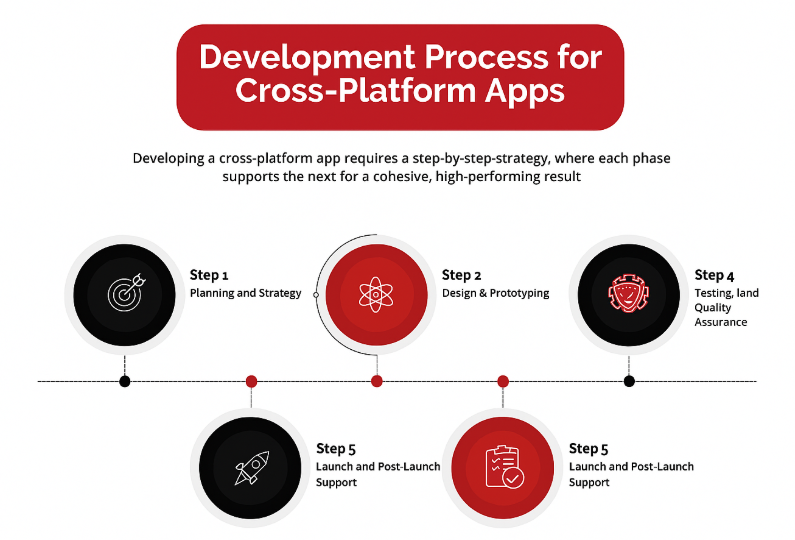
Cross-platform app development for startups allow developers write a single code and deploy it across multiple platforms – primarily android, ios, web and even the desktop environments. This approach helps leveraging a single codebase – minimizing overall costs, reducing development time, and simplifying updates.
Contrary to native app development, which requires building separate codes (Objective-C/Swift for iOS and Kotlin/Java for android) for each different platform, cross-platform relies on shared languages including Dart, JavaScript, or C# and frameworks that can quickly translate code for each platform’s native UI and functionality.
Native vs Cross-Platform App Development: A Quick Comparison
| Feature | Native | Cross-Platform |
|---|---|---|
|
Codebase |
Separate for each platform |
Single shared codebase |
|
Development Time |
Longer |
30–40% faster on average |
|
Cost |
Higher |
Lower (up to 40% savings) |
|
Performance |
Optimal |
Near-native with modern frameworks |
|
Maintenance |
Requires dual updates |
Centralized updates |
Cross-platform app development uses tools like React Native, Flutter, electron and Xamarin to make sure the app works fine across different environments. These tools help with compiling the code with native components or use bridges to interact with native APIs, ensuring good performance and a responsive user experience.
This is particularly valuable for startups that need cross platform mobile app development services without sacrificing speed or functionality.
In short, cross-platform development delivers on versatility and efficiency—both mission-critical for lean startups in 2025.
Top Benefits of Cross-Platform App Development for Startups
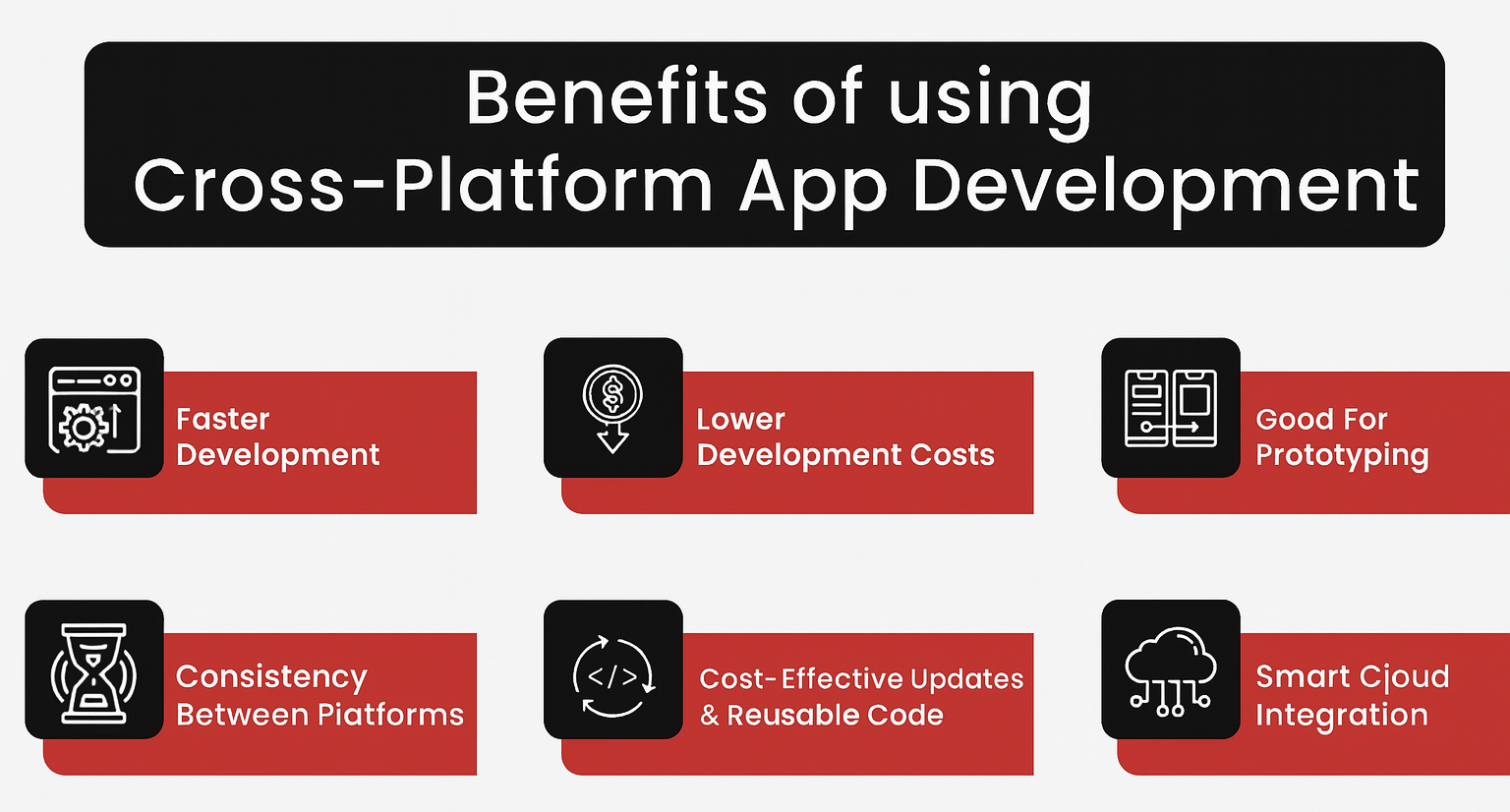
Startups operate in high-pressure environments where speed, budget, and scalability are crucial. Cross-platform app development for startups directly aligns with these priorities, offering several key benefits that give startups a competitive edge.
1. Faster Time to Market
With a single codebase for iOS, Android, and the web, startups can reduce development time by 30–50% compared to native app development. This speed is essential for MVP launches and early user acquisition.
2. Reduced Development Costs
Building two or more native apps can strain startup budgets. Cross-platform development lowers costs significantly by requiring fewer developers and fewer resources. According to Clutch, cross-platform apps can cost 35–40% less than native counterparts.
3. Wider Reach Across Devices
Launching simultaneously on multiple platforms allows startups to engage a larger audience from day one. Whether users are on Android, iOS, or even desktop, cross platform mobile app development ensures consistent access and performance.
4. Streamlined Maintenance and Updates
With centralized code, fixes and updates are deployed across all platforms at once. This reduces downtime and keeps all users on the same version—essential for fast-moving startups.
5. Scalability from MVP to Enterprise
Cross-platform mobile app development services are ideal for MVPs but can scale efficiently as your user base grows. Popular apps like Instagram, Uber Eats, and Pinterest all began with cross-platform or hybrid models before scaling up.
6. Consistent User Experience
A shared design system ensures a cohesive look and feel across devices. This builds trust and brand recognition, especially important for early-stage startups.
Best Cross-Platform App Development Frameworks in 2025
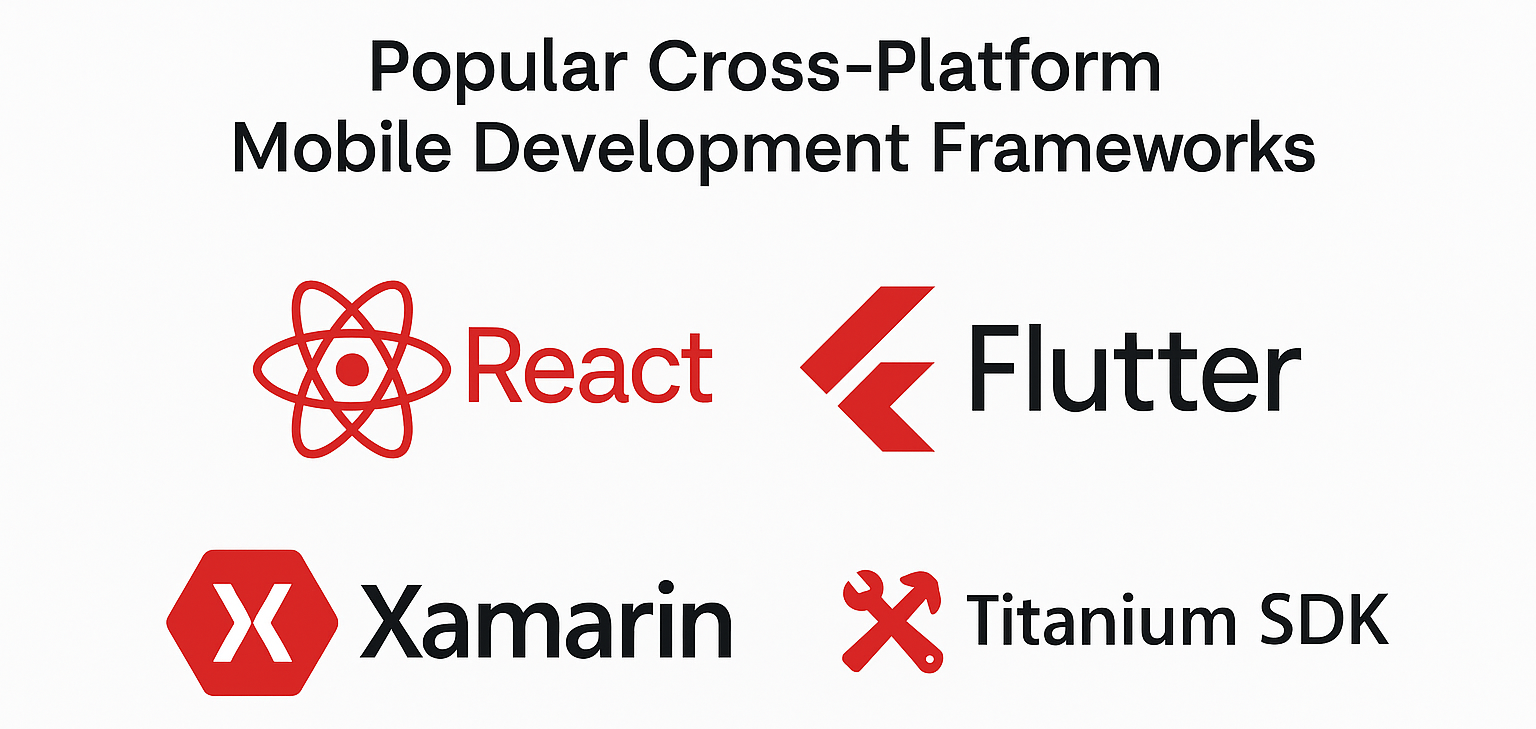
Choosing the right framework is critical to building high-performing cross-platform applications. The best cross platform app development for startup tools in 2025 offer performance, flexibility, and community support—making them ideal for startups looking to build fast and scale confidently.
Here’s a breakdown of the top frameworks shaping the cross-platform space:
1. Flutter
- Developed by Google
- Uses the Dart programming language
- Delivers near-native performance with customizable widgets
- Ideal for both mobile and cross platform web app development
- Strong community and growing enterprise adoption
According to Statista, Flutter is now the most popular cross-platform framework, used by 46% of developers worldwide.
2. React Native
- Backed by Meta (Facebook)
- Uses JavaScript and React
- Allows reuse of up to 90% of code between platforms
- Excellent for fast MVPs with real-time functionality
- Extensive third-party plugin ecosystem
React Native remains a favorite among startups due to its rapid development cycle and large talent pool.
3. Xamarin
- Powered by Microsoft
- Uses C# and .NET
- Strong integration with Visual Studio
- Great for cross platform desktop app development and enterprise apps
- Offers native-level performance for business-critical applications
4. Electron
- Best suited for cross-platform desktop apps
- Powers apps like Slack, Discord, and Visual Studio Code
- Allows web technologies (HTML, CSS, JS) to build native-like desktop experiences
5. Appcelerator Titanium
- Uses JavaScript to create native apps
- Not as mainstream today but still used for performance-focused builds
- Good support for older Android devices
Each framework offers unique advantages, but the best choice depends on the project scope, budget, and team expertise. At TechnBrains, we guide startups in selecting the most effective cross platform app development framework for their business model and product goals.
How to Choose the Right Cross-Platform App Development Company
Choosing the right partner in cross-platform app development for startups can mean the difference between a scalable product and a failed MVP. Here’s how to make an informed decision:
1. Look for Proven Startup Experience
The best mobile app development company is one that has worked with early-stage startups understands lean budgets, fast pivots, and MVP requirements. Check for case studies that showcase product-market fit, launch speed, or cross-platform scalability.
2. Evaluate Technical Expertise in Leading Frameworks
The company should be proficient in top frameworks like Flutter, React Native, Xamarin, and Electron. Ask which tools they recommend and why—it’s a quick way to gauge their ability to align with your tech vision.
3. Assess UI/UX Capabilities
Startups need to stand out. A good cross-platform app development for startups service provider will prioritize responsive, modern design with a consistent experience across mobile, web, and desktop platforms.
4. Ask About Post-Launch Support and Scaling
Does the team offer maintenance, feature iterations, and analytics support after launch? Your startup needs more than just app delivery—it needs a product partner.
5. Check Communication and Agile Practices
Time zones, dev cycles, and agile updates matter for successful startup app development. Choose a company that offers transparent progress tracking and milestone-based delivery.
6. Understand Their Approach to Testing
Cross platform mobile app development demands rigorous testing across devices and OS versions. Look for automated testing, QA processes, and performance monitoring.
Cost Breakdown: Cross-Platform App Development for Startups in 2025
For startups, development cost is often the deciding factor when choosing a mobile strategy. The good news: cross-platform app development for startups is typically more affordable than native alternatives—without compromising on performance.
Average Cost of Cross-Platform App Development in 2025
|
MVP (basic features, 2 platforms) |
$25,000 – $50,000 |
|
Mid-Complexity App (3rdparty APIs, dashboards) |
$50,000 – $90,000 |
|
Feature-Rich Apps (Analytics, Real-Time Features, Payments) |
$90,000 – $150,000+ |
Compared to native development—which often requires double the budget to build and maintain separate Android and iOS apps—cross-platform mobile app development for startups can cut development costs by up to 40%.
Factors That Influence Cost
- App complexity & features (user auth, in-app chat, payments, etc.)
- Choice of framework (e.g., Flutter may be more cost-effective than Xamarin for UI-heavy apps)
- UI/UX design scope
- Third-party integrations (e.g., Firebase, Stripe, social login)
- Maintenance & post-launch support
Native vs Cross Platform Cost Example
| Project Type | Native (iOS + Android) | Cross-Platform |
|---|---|---|
|
Social App MVP |
$80,000 |
$45,000 |
|
E-commerce App |
$120,000 |
$75,000 |
Budgeting Tips for Startups
- Prioritize core features for MVP launch
- Choose frameworks with strong community support to lower dev costs
- Work with a cross platform app development company that offers flexible engagement models
At TechnBrains, we provide customized pricing based on your startup’s stage, helping you invest wisely and grow fast. Our goal is to help you launch with impact—without blowing your budget.
Future Outlook: Why Cross-Platform Apps Will Dominate Startup Development in 2025
As the app economy matures, startups are under more pressure than ever to build fast, iterate quickly, and reach users on every device. Cross-platform app development for startups is no longer a compromise—it’s a strategic advantage. While there are unbeatable mobile app benefits for businesses aiming to expand and grow in 2025, cross-platform certainly adds to them – becoming a top development framework amongst many.
Key Trends Driving Cross-Platform Dominance
- AI & ML Integration
Modern frameworks like Flutter and React Native now support easy integration with AI/ML APIs, allowing startups to build smarter apps—from chatbots to personalized experiences—without complex native implementations. - Expansion to Desktop and Web
With the rise of cross platform desktop app development (via Electron, Xamarin) and cross platform web app development, startups can now launch unified experiences across every screen—without rebuilding from scratch. - Growing Framework Ecosystems
Tools like Flutter and React Native are backed by industry giants (Google and Meta) and updated constantly to support the latest OS features, UI standards, and device capabilities. - Unified DevOps and CI/CD Pipelines
Cross-platform app development tools now support full DevOps cycles—enabling seamless builds, automated testing, and rapid deployment pipelines across all platforms. - Demand for Consistent UX
Users expect the same experience on mobile, tablet, web, and desktop. Cross-platform ensures that design systems and functionality scale across every form factor.
Industry Perspective
According to Research and Markets, the global cross-platform development market is projected to grow at a CAGR of 16.8% from 2023 to 2030, driven largely by startup and SMB adoption.
In 2025, this means one thing: cross platform mobile app development for startups are not just an option—they’re a growth catalyst.
Final Thoughts: Why Startups Should Embrace Cross-Platform Development Now
For startups in 2025, agility is everything. With evolving user expectations, tighter funding environments, and an increasingly competitive app market, launching faster and smarter is no longer optional—it’s survival.
Cross-platform app development for startups provides exactly that edge:
- A shared codebase to reach more users
- Reduced development and maintenance costs
- Faster iterations to respond to market feedback
- Scalability from MVP to a full-scale product
- Seamless performance across mobile, web, and desktop
While native vs cross platform app development was once a debate, modern frameworks and tools have made cross-platform the default choice for lean, ambitious teams. The benefits of cross platform app development—from cost-efficiency to speed—are too strategic to ignore.
At TechnBrains, we specialize in helping startups build robust, scalable, and user-centric apps using the best cross platform app development software, tools, and frameworks available today. Whether you’re validating a concept or scaling your product, our expert team is ready to partner with you at every stage.
In This Article

Blocked by Backlog or Missed Deadlines?
Senior developers who build, fix, and ship, without slowing your team down.