Build and Scale Faster
150+ products shipped for startups and enterprises by engineers focused on real outcomes.
"Their ability to quickly understand an unfamiliar use case and respond creatively to it is impressive."

Anonymous
Executive, Pured Disc Golf

"TechnBrains resolved challenges efficiently and turned my vision into a solid, functional product with a strong foundation."

Jalen Gibbs
Founder, STREAMLINE LIVE
"The talent they provided was solid, but more importantly, they were quick to align with our way of working."

Nancy Snyder
Managing Director, MimeCast
Our trusted clients


Start Your Product Journey Today
Turn your idea into a working product. Share a few details and we'll help define the roadmap, timeline, and execution approach.
Types of Automotive Solutions – Features and Cost in 2025
Automotive solutions are topping the charts in custom software development industry. Managing operations manually is no longer viable, leading to missed opportunities and increased costs. The automotive software market is ought to grow from $19 billion to $32 billion by the end of 2030. Without automotive solutions, companies face challenges like inaccurate financial tracking, inefficient supply chain management, and lack...


Updated Feb 10, 2025
Automotive solutions are topping the charts in custom software development industry. Managing operations manually is no longer viable, leading to missed opportunities and increased costs. The automotive software market is ought to grow from $19 billion to $32 billion by the end of 2030.
Without automotive solutions, companies face challenges like inaccurate financial tracking, inefficient supply chain management, and lack of real-time insights. Automotive businesses that fail to adopt advanced automotive software development services risk losing their competitive edge. With 2025 bringing new technological advancements, investing in the right automotive software development is important as ever.
The right automotive solutions streamline operations, improve efficiency, and enhance customer experiences. From automotive ERP software to automotive finance software, businesses can leverage cutting-edge tools to stay ahead. For readers seeking and answer for How much does automotive software development cost?
The cost of developing software for cars ranges from $40,000 to $150,000, depending on how complex the project is. Key activities in this phase include writing efficient code, connecting the software with hardware like sensors and electronic control units (ECUs), and conducting thorough testing.
Below, we explore the types of automotive solutions, their features, and their costs to help you choose the best one for your business.

Automotive ERP & Management Software
Automotive ERP software is a comprehensive system that helps automotive businesses manage operations, including inventory, finance, supply chain, and human resources, all in one platform.
Features of Automotive ERP Software
- Centralized Data Management: Provides a unified system for inventory, orders, and finances.
- Supply Chain Optimization: Automates procurement, vendor management, and logistics.
- Real-time Analytics: Tracks business performance with detailed insights.
- Regulatory Compliance: Ensures adherence to automotive industry standards.
- Scalability: Grows with business expansion and changing requirements.
The cost of Automotive ERP software is between $10,000 and $500,000, depending on features, vendor, company size, and number of users. The average cost per user is around $9,000.
What is Automotive Management Software?
Automotive Management Software on the other hand is designed to help dealerships, service centers, and manufacturers streamline daily operations. It includes tools for customer relationship management (CRM), sales tracking, and after-sales service management.
Features of Automotive Management Software
- Customer Relationship Management (CRM): Manages customer interactions and improves sales.
- Work Order Automation: Enhances workshop efficiency by tracking repairs and service history.
- Dealer & Sales Management: Simplifies sales, invoicing, and customer follow-ups.
- Fleet Management: Optimizes vehicle usage, maintenance, and fuel consumption.
- Multi-location Support: Suitable for large automotive enterprises with multiple branches.
Automotive management software typically costs between $100 and $300 per month.
Key pricing details are that Entry-level plans start around $100 per month. Advanced features can exceed $300 per month for complex functions. Well, this costs vary based on features, user limits, customization, and vendor reputation.
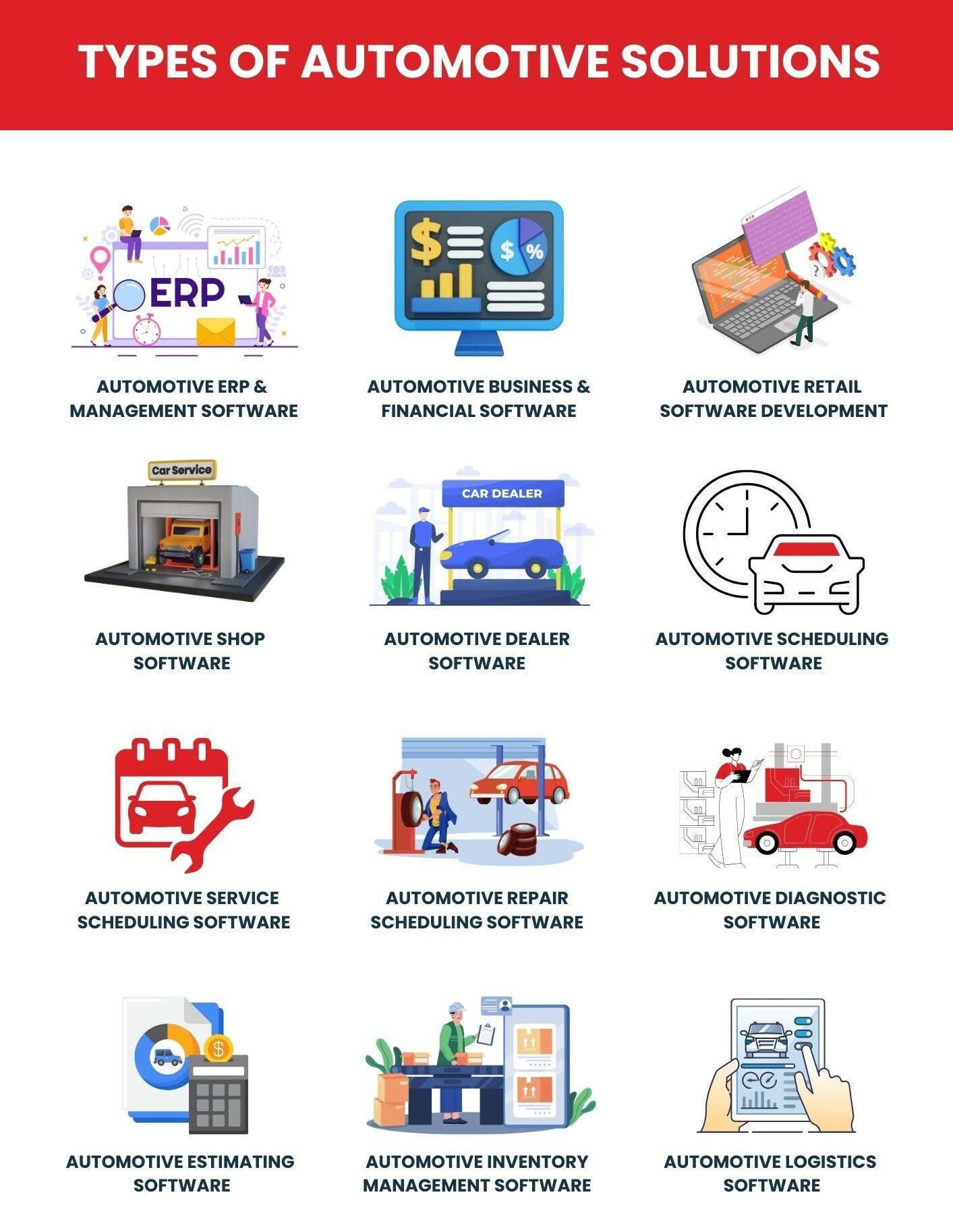
Automotive Business & Financial Software
This category includes automotive solutions for managing accounting, finance, leasing, lending, and bookkeeping for automotive businesses. These tools help ensure financial transparency, streamline transactions, and improve cash flow management. Now you have a lot of options when it comes to this category of automotive solutions. Lets explore some of the best ones below:
- Automotive Accounting Software, with this you can track income, expenses, and financial reports like a pro.
- Automotive Finance Software, helps you manage loans, investments, and financial planning so you never have to worry about running out of expenses to run your business.
- Automotive Leasing Software, helps in automating lease agreements, contracts, and payments, because nobody has time to manually chase signatures like it’s the 1800s.
- Automotive Lending Software helps with auto loans, credit checks, and interest calculations, ensuring you lend money wisely instead of just crossing your fingers.
- Automotive Bookkeeping Software, as the name suggest, keeps your records neat, payroll on point, and tax compliance stress-free (or at least slightly less terrifying).
The cost of automotive business & financial software varies based on features and company size. Basic Plans can cost you from $2,000 – $10,000 annually. With Advanced Plans starting from $15,000 – $40,000 annually and Enterprise Solutions can cost upto $50,000+ annually.
Automotive Retail Software Development
Automotive retail software streamlines sales and inventory management for car dealerships, auto parts retailers, and service providers. It helps businesses enhance customer experience, optimize stock management, and improve sales forecasting.
Key Features:
- Point of Sale (POS) Integration – Streamlines sales transactions and automates inventory updates.
- Customer Relationship Management (CRM) – Enhances customer engagement and loyalty programs.
- Inventory Management – Tracks stock levels in real-time to prevent overstocking or shortages.
- Analytics and Reporting – Is one of the Automotive Solutions insights into sales trends and consumer behavior.
- E-commerce Integration – Supports online sales alongside in-store operations.
Automotive scheduling software can cost between $15 and several hundred dollars each month. The price depends on the SaaS platform and the features it provides.
Automotive Shop Software
Automotive shop software helps repair shops and service centers manage appointments, work orders, billing, and parts inventory efficiently. It reduces manual paperwork, improves workflow, and enhances customer communication.
Key Features:
- Appointment Scheduling – Automates customer bookings and reminders.
- Repair Order Management – Tracks job progress from initiation to completion.
- Parts and Inventory Control – Ensures parts availability and streamlines ordering.
- Billing and Invoicing – Generates accurate invoices and integrates with payment gateways.
- Technician Management – Assigns jobs and tracks technician productivity.
Typically available on a subscription basis, with entry-level plans starting at $104/month, while advanced features may cost up to $315/month.
Automotive Dealer Software
Automotive dealer software helps car dealerships manage inventory, sales, customer relationships, and financing. It simplifies operations by automating lead management, paperwork, and financing options.
Key Features:
- Inventory Management – Tracks available vehicles and updates listings in real-time.
- Sales Management – Monitors leads, test drives, and purchase history.
- F&I (Finance and Insurance) Integration – Assists with financing options and insurance management.
- Customer Relationship Management (CRM) – Stores customer data for better follow-ups.
- Reporting and Analytics – Provides detailed insights into sales performance and market trends.
Pricing varies based on features and provider, with some solutions starting at $200/month and more comprehensive options exceeding $500/month.
Automotive Scheduling Software
This software helps auto shops, dealerships, and service centers schedule customer appointments, track bookings, and optimize workflows. It minimizes scheduling conflicts and improves efficiency.
Key Features:
- Automated Appointment Booking: Customers can book online, reducing call volume.
- Calendar Integration: Syncs with Google Calendar, Outlook, or other scheduling tools.
- SMS & Email Reminders: Sends automatic notifications to reduce no-shows.
- Technician Assignment: Ensures the right mechanic is scheduled for the job.
- Reporting & Analytics: Tracks peak service hours and customer trends.
Automotive service scheduling software costs between $70 and $400 per month. The price depends on the plan and features you choose.
Automotive Service Scheduling Software
A specialized scheduling tool for service centers, these automotive solutions ensure customer appointments are organized while streamlining technician availability and parts readiness.
Key Features:
- Online Booking System: Customers can schedule services 24/7.
- Work Order Management: Tracks job progress and technician workloads.
- Multi-Location Support: Helps franchises manage scheduling across different branches.
- Customer History Tracking: Saves past service records for personalized recommendations.
- Mobile App Support: Enables technicians to view and update schedules on the go.
The cost of automotive repair scheduling software usually ranges from $70 to $100 per month for a basic plan. If you need more advanced features or a higher number of users, the price can go up to $400 per month, depending on the platform and features included.
Automotive Repair Scheduling Software
This software is designed for repair shops to efficiently allocate repair tasks, manage workloads, and reduce downtime.
Key Features:
- Real-Time Technician Scheduling: Ensures mechanics are assigned efficiently.
- Parts Availability Check: Verifies parts are in stock before scheduling repairs.
- Integrated Invoicing: Connects with accounting software for seamless billing.
- Mobile Access: Technicians can update repair statuses from their devices.
- Customer Portal: Clients can track their repair progress online.
Automotive Repair Scheduling Software Costs starts at $50/month for independent repair shops, with enterprise solutions reaching $300/month.
Automotive Diagnostic Software
This software helps mechanics and service centers diagnose vehicle issues by reading error codes and running real-time system checks.
Key Features:
- OBD-II Scanner Integration: Reads and clears vehicle trouble codes.
- Live Data Monitoring: Displays engine and sensor data in real-time.
- Multi-Vehicle Compatibility: Works with various makes and models.
- Repair Suggestions: Offers solutions based on diagnostic codes.
- Mobile & Cloud Support: Allows remote access to diagnostic reports.
Estimated Cost of Automotive Diagnostic Software for basic versions start at $100 (one-time fee), while professional-grade tools range from $500 to $5,000.

Automotive Estimating Software
Designed for repair shops, insurers, and mechanics, this software calculates the cost of vehicle repairs, including parts, labor, and materials.
Key Features:
- Automated Cost Estimation: Uses industry databases for accurate pricing.
- Labor Rate Calculation: Adjusts for different job complexities.
- Parts Database Integration: Fetches up-to-date prices from suppliers.
- Custom Quotes: Generates customer-friendly repair estimates.
- Claim Management: Assists with insurance claims and approval processes.
The price of automotive estimating software varies based on features, provider, and number of users. Basic plans typically cost a few hundred dollars per year, while comprehensive packages with advanced features can cost several thousand dollars annually.
Automotive Inventory Management Software
This software helps auto businesses track and manage spare parts, accessories, and vehicle stock, preventing shortages and overstocking.
Key Features:
- Real-Time Stock Tracking: Monitors inventory levels automatically.
- Barcode & QR Scanning: Speeds up part identification and tracking.
- Order Management: Automates supplier orders when stock runs low.
- Multi-Location Support: Manages inventory across different warehouses or branches.
- Reporting & Forecasting: Predicts demand based on sales trends.
Automotive inventory management software costs between $50 and $500 each month, with an average cost of about $175 per month. The price depends on the software chosen and the user’s budget.
Automotive Logistics Software
These automotive solutions helps auto manufacturers, dealerships, and parts distributors manage vehicle and parts transportation efficiently.
Key Features:
- Route Optimization: Reduces delivery times and fuel costs.
- Fleet Tracking: Monitors vehicle locations and performance.
- Warehouse Integration: Connects logistics with inventory systems.
- Load Planning: Maximizes vehicle capacity for cost-effective transport.
- Automated Dispatching: Assigns shipments to available drivers.
The cost of automotive logistics software can vary widely. It usually ranges from $30,000 to $200,000 or more each year. This cost often depends on the features you need, the size of your operations, and the vendor you choose.
Automotive Supply Chain Software
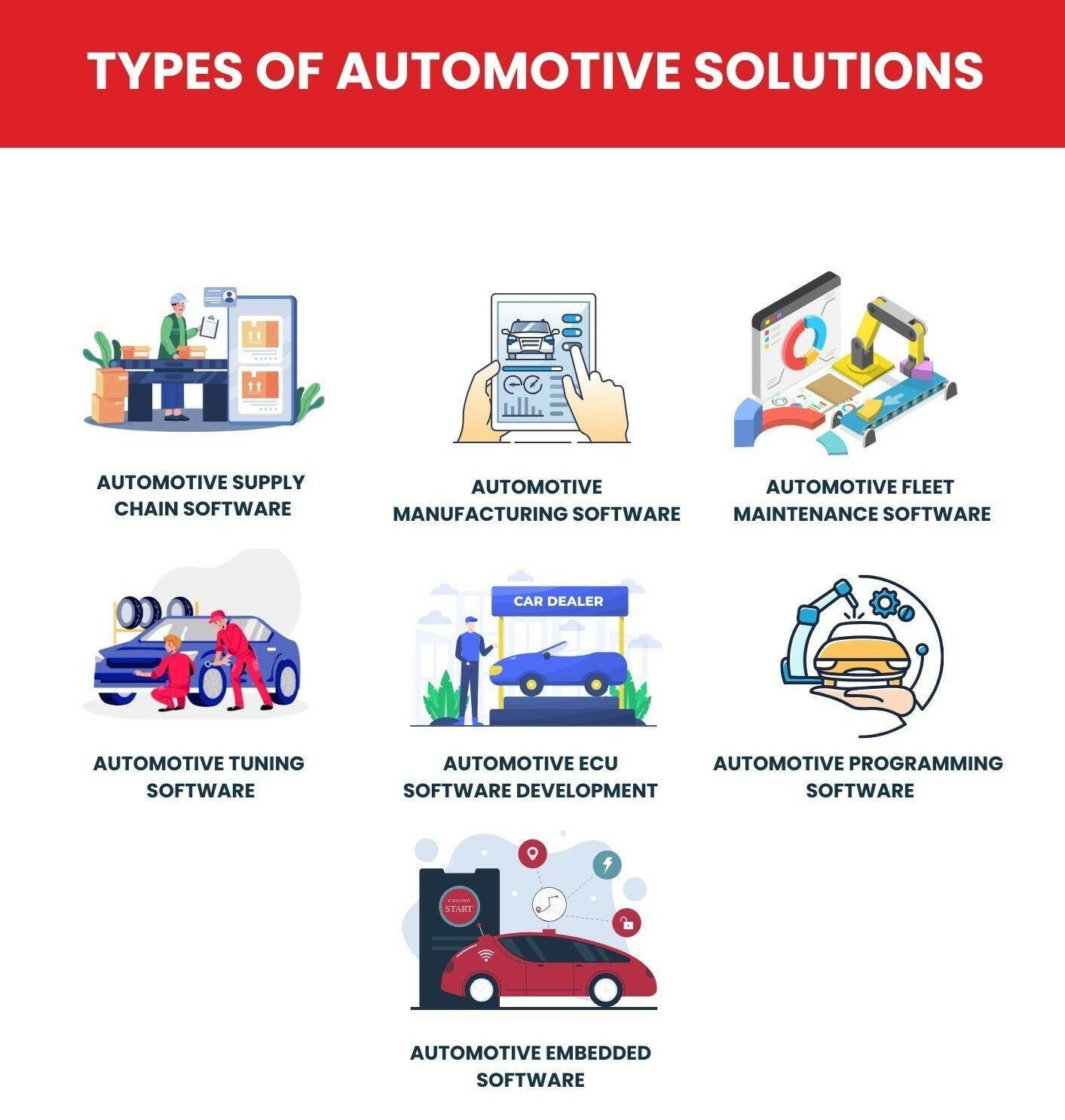
This software manages the entire supply chain, from raw materials to finished vehicles, ensuring smooth production and distribution.
Key Features:
- Supplier Management: Tracks orders, shipments, and supplier performance.
- Demand Forecasting: Uses AI to predict future needs and prevent shortages.
- Real-Time Analytics: Provides visibility into every stage of the supply chain.
- Compliance Tracking: Ensures regulatory and safety standards are met.
- Automated Procurement: Streamlines ordering processes for efficiency.
The price of automotive supply chain software varies based on features, business size, and the vendor. Generally, costs range from $25,000 to $500,000. Small businesses usually spend closer to the lower end, while larger companies typically need more advanced systems, leading to higher costs.
Automotive Manufacturing Software
Used by vehicle manufacturers, this software streamlines production, assembly line management, and quality control.
Key Features:
- Production Scheduling: Optimizes assembly line workflows.
- Quality Control Tools: Detects defects early in the manufacturing process.
- Supply Chain Integration: Ensures just-in-time (JIT) manufacturing efficiency.
- Workforce Management: Assigns tasks and monitors employee productivity.
- IoT Connectivity: Uses smart sensors for machine performance tracking.
Automotive manufacturing software can cost between $60,000 and over $300,000. The price depends on several factors, such as the type of software, the project’s complexity, and the development process.
Automotive Fleet Maintenance Software
This software assists fleet managers in scheduling maintenance, tracking repairs, and managing vehicle health to ensure optimal performance and longevity.
Key Features:
- Maintenance Scheduling: Automates service reminders and preventive maintenance tasks.
- Repair Tracking: Logs repair history and associated costs for each vehicle.
- Inventory Management: Monitors parts inventory and alerts when reordering is necessary.
- Fuel Management: Tracks fuel consumption to identify inefficiencies.
- Telematics Integration: Provides real-time data on vehicle location and performance.
Fleet management software costs between $15 and $50 per vehicle each month. The price depends on the features you need and the size of your fleet. For a small fleet of 10 vehicles with basic features, you can expect to pay about $15 per vehicle per month, which adds up to around $180 per year.
Automotive Tuning Software
Designed for performance enthusiasts and professionals, these automotive solutions allows for the modification of a vehicle’s engine control parameters to enhance performance, fuel efficiency, or customize driving characteristics.
Key Features:
- ECU Remapping: Adjusts engine parameters like fuel injection and ignition timing.
- Preloaded Tunes: Offers preset configurations for various performance goals.
- Data Logging: Records engine data for analysis and fine-tuning.
- Diagnostic Tools: Identifies and clears error codes.
- User-Friendly Interface: Simplifies the tuning process for both novices and experts.
Automotive Tuning Software costs for Basic handheld tuners may start around $200 to $300, while more advanced software solutions can range from $300 to $2,000, depending on features and vehicle compatibility.
Automotive ECU Software Development
This involves creating or modifying the software within a vehicle’s Engine Control Unit (ECU) to optimize engine performance, emissions, and fuel efficiency.
Key Features:
- Custom Algorithm Development: Tailors control strategies for specific engine configurations.
- Real-Time Monitoring: Provides live data on engine performance metrics.
- Calibration Tools: Allows precise adjustment of engine parameters.
- Simulation Capabilities: Tests software changes in a virtual environment before deployment.
- Compliance Testing: Ensures adherence to emission and safety standards.
The cost of developing custom software for automotive ECUs usually ranges from $40,000 to $150,000. This cost depends on how complex the project is. Important factors include the features needed, the design of the user interface and user experience, the skills of the developers, the location of the work, and how much testing is required.
Automotive Programming Software
Tools in this category are used to program various vehicle modules, including the ECU, Transmission Control Unit (TCU), and other embedded systems, to update firmware or alter functionalities.
Key Features:
- Module Reprogramming: Updates or modifies software in various vehicle control units.
- Diagnostic Functions: Performs system checks and troubleshooting.
- Parameter Configuration: Adjusts settings for different vehicle systems.
- Firmware Updates: Ensures all modules have the latest software versions.
- Security Access: Manages access to protected vehicle systems.
Estimated Cost of Automotive Programming Software Professional-grade programming tools can range from $1,000 to $5,000, with additional costs for licenses and updates of automotive solutions.
Automotive Embedded Software
This software is integral to the operation of various in-vehicle systems, such as infotainment, advanced driver-assistance systems (ADAS), and telematics.
Key Features:
- Real-Time Operating Systems (RTOS): Manages hardware resources and timing constraints.
- Safety-Critical Functions: Controls systems like airbags and braking.
- Connectivity Features: Enables communication between vehicle systems and external devices.
- User Interface Management: Handles displays and controls for driver interaction.
- Sensor Integration: Processes data from cameras, radar, and other sensors.
The expenses involved in creating automotive embedded software can vary between $50,000 and $300,000 based on the project’s complexity, required functionalities, development costs, geographic location, and the extent of hardware integration necessary; projects with more sophisticated features such as ADAS systems usually approach the upper end of this spectrum.

Automotive Solutions for You – WrapUp
As the automotive industry changes, using the right solutions is essential for staying competitive. Businesses need to adopt technology like ERP systems, dealership management software, and fleet maintenance tools to improve efficiency, lower costs, and enhance customer service.
In 2025, we will see more advancements in AI, IoT, and cloud computing. Investing in flexible and integrated automotive solutions will make a big difference. Companies that embrace these innovations can streamline their operations and prepare for rapid changes in the industry. Now is the time to make smart choices and use the best automotive solutions to succeed.
In This Article

Blocked by Backlog or Missed Deadlines?
Senior developers who build, fix, and ship, without slowing your team down.