Build and Scale Faster
150+ products shipped for startups and enterprises by engineers focused on real outcomes.
"Their ability to quickly understand an unfamiliar use case and respond creatively to it is impressive."

Anonymous
Executive, Pured Disc Golf

"TechnBrains resolved challenges efficiently and turned my vision into a solid, functional product with a strong foundation."

Jalen Gibbs
Founder, STREAMLINE LIVE
"The talent they provided was solid, but more importantly, they were quick to align with our way of working."

Nancy Snyder
Managing Director, MimeCast
Our trusted clients


Start Your Product Journey Today
Turn your idea into a working product. Share a few details and we'll help define the roadmap, timeline, and execution approach.
How to build a Healthcare App: A Comprehensive Guide
Overview: The use of healthcare apps has risen in the last 5 years. Patients had access to over 318,000 apps in 2018, with 200 new ones developed daily. This number has likely increased due to Covid-19. If you want to build your own healthcare app, TechnBrains is here with a comprehensive guide. Healthcare mobile app development is revolutionizing the way...

Updated Jul 09, 2026
Overview: The use of healthcare apps has risen in the last 5 years. Patients had access to over 318,000 apps in 2018, with 200 new ones developed daily. This number has likely increased due to Covid-19. If you want to build your own healthcare app, TechnBrains is here with a comprehensive guide.
Healthcare mobile app development is revolutionizing the way we access medical information and services. A healthcare app will make it easier for users to connect with healthcare experts and manage their health conveniently.
Healthcare and Medical Apps helps everyone, doctors, patients, nurses, pharmacists and administrators. If you would like to build your healthcare app, we’ve put together a guide that will give you the support you need to get started.
Additionally, we will examine the various types of healthcare apps, successful examples, the cost of development, and tips for choosing the right healthcare app development company.
What is Healthcare App Development?
Healthcare app development is the process of building a mobile application to cater the healthcare needs of the user. It can be general wellness and fitness tracking to complex medical diagnoses the user will be able to submit and follow them in real-time.
These apps serve as a bridge between patients and healthcare providers, offering services that improve healthcare access, efficiency, and patient outcomes. You can also hire app developers to get this job done.
Stats of Healthcare Apps in 2023
If you are interested in building a healthcare mobile app, there are services available for you to explore. Take a closer look at the Key Health App Sector Statistics below:
- The App Store of Apple has 45,478 healthcare apps available.
- There are approximately 43,285 applications available on the Play Store.
- It is expected that the revenue for the healthcare industry will increase to $35.7 billion by 2030, which is a significant growth from the $8.21 billion generated last year.

Benefits of Healthcare App
Healthcare app development is beneficial for many reasons, some of which are:
Benefits of Healthcare App for Doctors
- They provide efficient tools to manage patient data, medical history, prescriptions, and treatment plans in one centralized location for doctors.
- Doctors can offer telemedicine services, conducting remote consultations in real-time for patients in remote areas or those with mobility constraints.
- Healthcare apps facilitate seamless communication between doctors and patients through secure messaging systems.
- By automating routine tasks like appointment scheduling and reminders, doctors can optimize their time and focus more on providing quality care to patients.
- Healthcare apps are a convenient way for doctors to stay up-to-date on medical advancements.
Benefits of Healthcare App for Patients
- Patients can conveniently schedule appointments with doctors through the app, avoiding long waiting times and enhancing access to healthcare services.
- Patients can view and manage their medical records which will allow them to take control of their health information and share it with other healthcare providers as needed.
- If a user is with chronic conditions can benefit from remote monitoring functionalities available in healthcare apps.
- Healthcare apps will also help Patients take care of their mental health. The App can send medication reminders, ensuring patients take their prescribed medications on time and adhere to treatment plans effectively.
- Patients can use healthcare apps to monitor their fitness activities, track their diet, and set health goals, promoting a healthier lifestyle.

Difference between a Health App and a Medical App?
Health apps cater to the general public, while medical apps are intended for use by medical professionals to enhance patient care and collaboration among healthcare experts. Here are some key differences between them:
Health App
- Targeted towards the general public and individuals seeking to improve their overall health and wellness.
- Provides health-related services and information, such as fitness tracking, nutrition management, sleep monitoring, and mental health support.
- Usually does not require regulatory compliance and can function without direct claims on medical evidence.
- Development costs are generally lower compared to medical apps.
- Users can access health apps to monitor their health conditions and lifestyle habits.
| Health App | Medical App |
| For General public and individuals seeking wellness | For Medical professionals and healthcare providers |
| Promote overall health and wellness | Facilitate diagnosis, treatment, and clinical support |
| Fitness tracking, sleep monitoring, mental health support, personal health goals | Diagnosis based on analytical data to electronic health records |
| Typically does not require direct claims on medical evidence | Must comply with strict medical regulations and adhere to standards |
| Generally lower development costs | Development process can be more complex and costly |
| Users access to monitor their health conditions and lifestyle habits | Medical professionals access electronic health records and patient information |
| Empower individuals to manage their well-being | Enhance patient care and collaboration among healthcare experts |
Medical App
- Designed for use by medical professionals and healthcare providers.
- Focuses on diagnosis, treatment management, and clinical support based on analytical data and medical evidence.
- Requires compliance with strict medical regulations, testing, and adherence standards.
- Development process can be more complex and costly compared to health apps.
- Medical apps provide access to electronic health records, patient information, and enable remote medical assistance.
By utilizing tracking, fitness, and health information, users can actively engage in managing their well-being, while medical professionals can access critical data, exchange insights, and stay updated with the latest medical practices and advancements.
What Types of Healthcare Apps?
Healthcare app development encompasses two main types of applications:
- Professional Healthcare Apps
- Applications for Patients
These apps cater to different user groups and serve diverse purposes within the healthcare industry. Let us look at them in detail:
| Professional Solutions | Applications for Patients | |
| Target Audience | Medical professionals, doctors, nurses, healthcare providers | Individuals seeking to manage their health and well-being |
| Purpose | Streamline medical practices, patient management, | Empower patients to monitor health, access |
| administrative functions | medical information, and receive personalized care | |
| Examples | Lybrate | Epocrates |
| Working Model | – Database | – Health Monitoring |
| – Networking (Clinical and Patient Communication) | – Medication Management | |
| – Patient Health Tracker | – Lifestyle and Mental Health Support | |
| – Doctor Scheduling | – Women’s Health Apps | |
| – Telehealth | ||
| – Medical Record | ||
| – Risk Assessment | ||
| – Medication Prescription and Dosage | ||
| Revenue Generation | – Cost Savings | – In-App Purchases |
| – Subscription-based Models | – Free Trial Model | |
| Limitations | – Complexity | – Competition |
| – Regulatory Compliance | – User Validation |
1. Professional Healthcare Apps
Professional healthcare apps are designed for use by medical professionals, doctors, nurses, and healthcare providers. They aim to streamline medical practices, patient management, and administrative functions. Examples of such apps include Lybrate, which helps doctors manage staff and patient interactions efficiently.
Working Model
- Database: Securely stores patient information and medical records.
- Networking (Clinical and Patient Communication): Facilitates communication between healthcare providers and patients.
- Patient Health Tracker: Allows monitoring of patients’ health parameters and medical conditions.
- Doctor Scheduling: Helps doctors manage their appointments and schedules.
- Telehealth: Enables remote consultations between doctors and patients.
- Medical Record: Provides access to electronic health records.
- Risk Assessment: Assists in assessing patient risks and health conditions.
- Medication Prescription and Dosage: Facilitates the prescription and tracking of medication.
Revenue Generation
- Cost Savings: By streamlining processes through mobile healthcare apps.
- Subscription-based Models: Generating revenue through subscription-based apps for patients.
Limitations
- Complexity: Developing healthcare apps for professionals can be challenging due to the diverse and complex working models involved.
- Regulatory Compliance: Adherence to privacy policies, such as HIPAA in the US, poses challenges in building HIPAA-compliant apps.
2. Applications for Patients
Patient-oriented healthcare apps cater to individuals seeking to manage their health and well-being effectively. These apps empower patients to monitor their health, access medical information, and receive personalized care. Examples include Epocrates, which provides services for patient management and point of care.
Working Model
- Health Monitoring: Allows patients to track their health data and share it with doctors for better diagnosis and care.
- Medication Management: Assists patients in managing their medications and dosage schedules.
- Lifestyle and Mental Health Support: Provides guidance and support for lifestyle changes and mental well-being.
- Women’s Health Apps: Addresses specific health needs of women, such as menstrual tracking and pregnancy management.
Revenue Generation
- In-App Purchases: Offering additional features or services through in-app purchases.
- Free Trial Model: Providing a free trial period before charging users for premium features.
Limitations
- Competition: The patient app segment is vast and highly competitive, requiring market-driven app development.
- User Validation: Ensuring end users’ needs are considered during the app development process.
Healthcare apps cater to various user groups and serve different purposes, making a significant impact on the healthcare industry by enhancing patient care, streamlining processes, and providing valuable medical support.
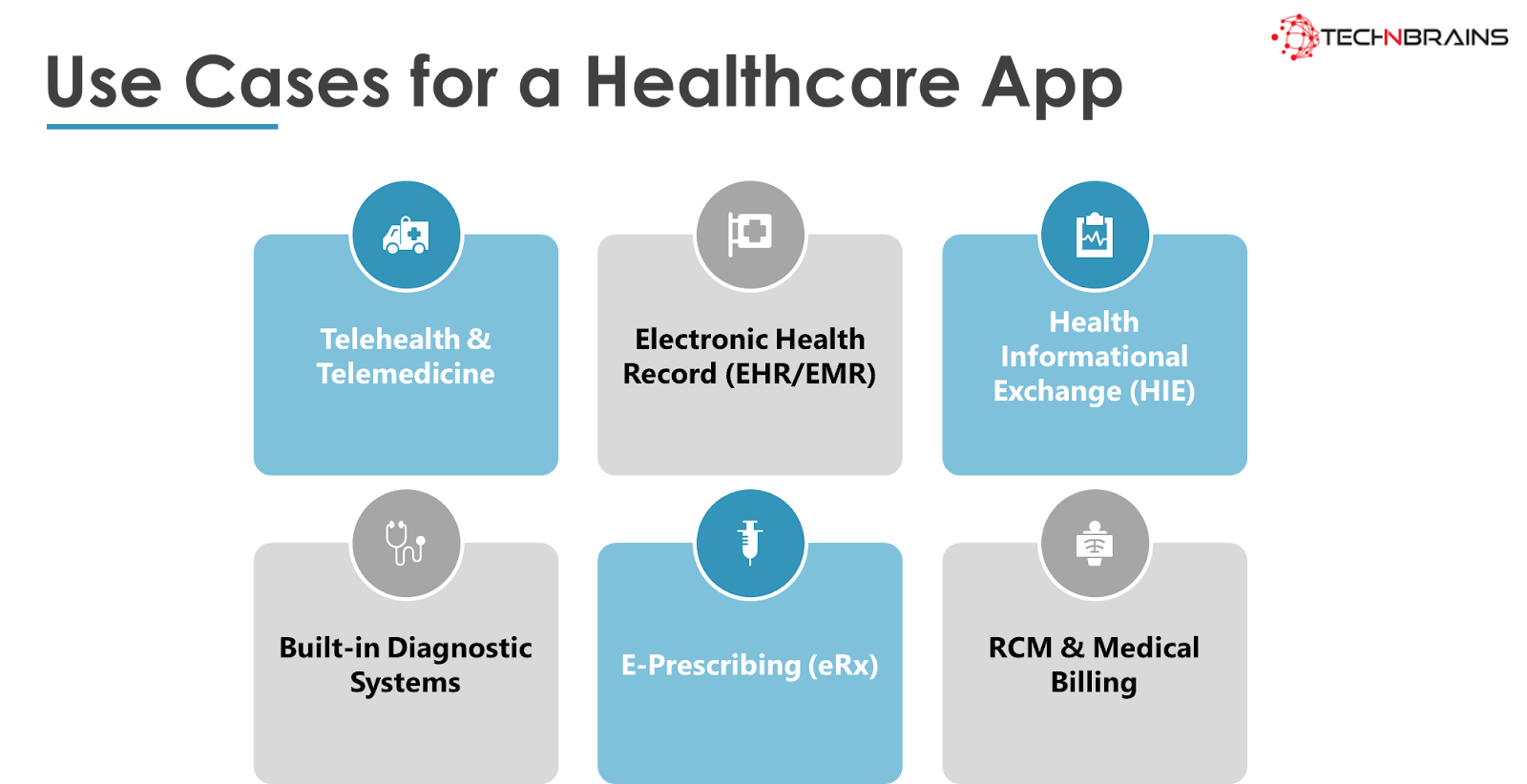
Use Cases for a Healthcare App
To meet the demands of the healthcare market and create effective healthcare applications, it’s crucial to understand the trending use cases in this field. Below are some of the most popular use cases for healthcare apps:
Use Case 1: Telehealth & Telemedicine
Telehealth and telemedicine apps have gained significant traction, especially during the COVID-19 pandemic and social isolation. These applications facilitate remote medical consultations between doctors and patients, enabling efficient healthcare services and online communication.
Use Case 2: Electronic Health Record (EHR/EMR)
EHR/EMR solutions provide a centralized platform to track, store, update, and collect all medical information about a patient. This streamlines healthcare processes, eliminates manual errors, and enables the exchange of patient data between different healthcare institutions.
Use Case 3: Health Informational Exchange (HIE)
HIE solutions focus on tracking vital signs, such as body temperature, blood pressure, and heart rate, to make accurate diagnoses and maintain patients’ well-being. These solutions allow easy and quick measurement of vital parameters using a smartphone’s authentication, facilitating faster data transfer and efficient monitoring by healthcare professionals.
Use Case 4: Built-in Diagnostic Systems
Built-in diagnostic systems collect and process data from embedded and IoT devices, integrating with EHR platforms. This enables doctors to visualize, analyze, and diagnose the condition of remote patients, track their progress, and determine suitable treatments.
Use Case 5: E-Prescribing (eRx)
E-prescribing systems enable doctors to create, store, and send out prescriptions using electronic health record systems. This solution minimizes errors during check-out and saves time for both doctors and patients.
Use Case 6: RCM & Medical Billing
RCM (Reliability-centered maintenance) solutions offer medical billing systems that cover Electronic Health Records (EHR) and Practice Management (PM) services. Users can access patient records and check bills on the go, without the need for separate sign-ins or expensive hardware. This solution ensures data security and compliance.
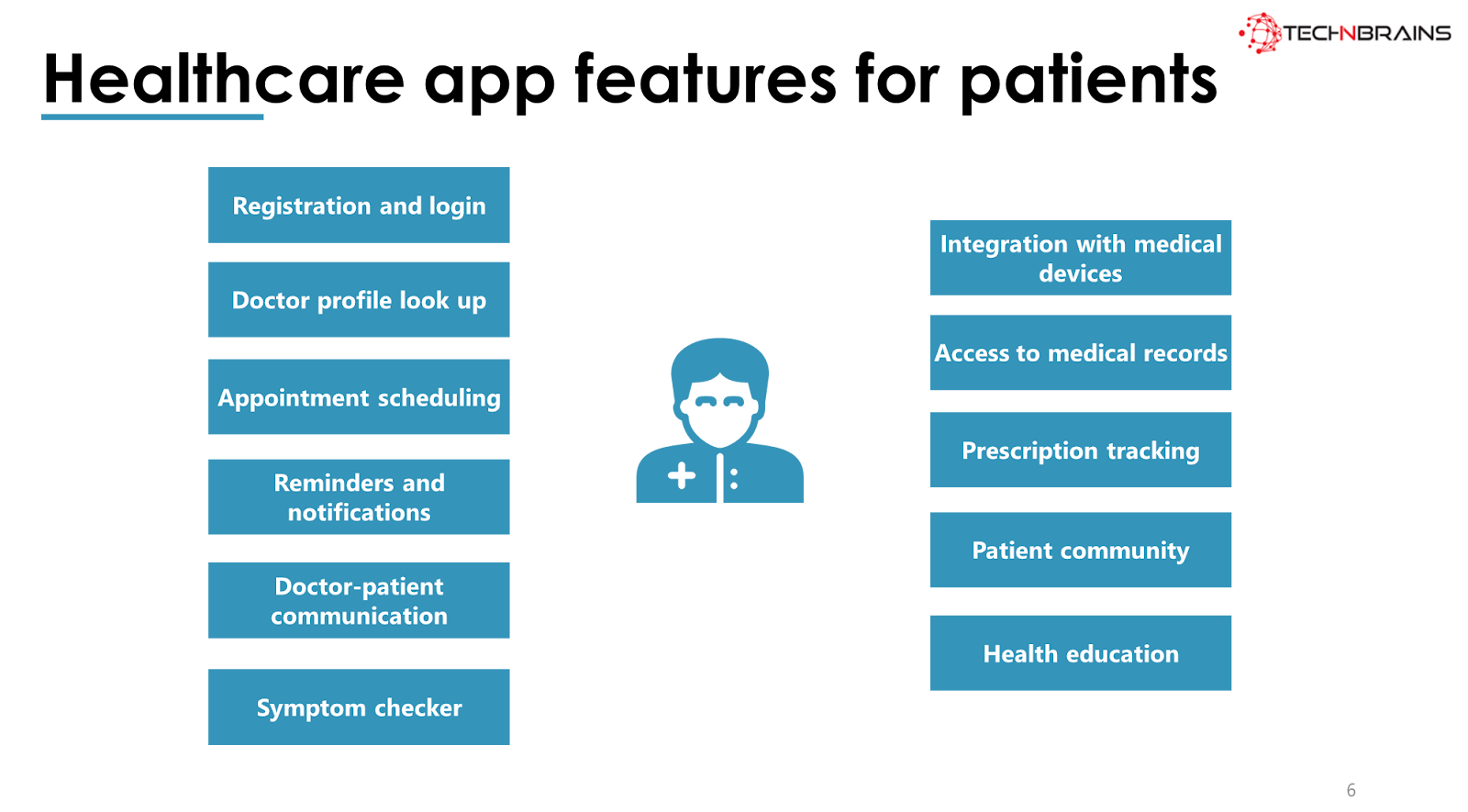
Features in a Healthcare App
Now that you have decided to build a healthcare app of your own, below are some features for a healthcare app for doctors and patients.
Healthcare App Features for Patients
- Registration and login: This feature allows patients to create an account and log in to the healthcare app, providing personalized access to various services and features.
- Doctor profile lookup: Patients can search for and view detailed profiles of healthcare providers within the app, helping them find suitable doctors based on specialties, experience, and reviews.
- Appointment scheduling: Patients can schedule appointments with doctors and other healthcare services through the app, offering convenience and reducing waiting times.
- Reminders and notifications: The app sends timely reminders and notifications to patients, such as upcoming appointments, medication schedules, and health-related updates.
- Doctor-patient communication: This feature enables secure communication channels between patients and healthcare providers, allowing them to exchange messages, discuss health concerns, and seek medical advice.
- Symptom checker: The app may have a symptom checker tool that assists patients in assessing their symptoms and providing initial guidance on potential health issues.
- Integration with medical devices: The app can connect with various medical devices (e.g., fitness trackers, blood pressure monitors) to gather and display health data for better monitoring.
- Access to medical records: Patients can access and view their medical records, including test results, treatment history, and diagnoses, empowering them to manage their health information.
- Prescription tracking: Patients can keep track of their prescribed medications, dosages, and refill information to ensure timely adherence to treatment plans.
- Patient community: Some healthcare apps include a patient community or support groups, where users can share experiences, seek advice, and provide emotional support.
- Health education resources: The app may offer educational materials, articles, and resources to help patients understand various health conditions, treatments, and preventive measures.
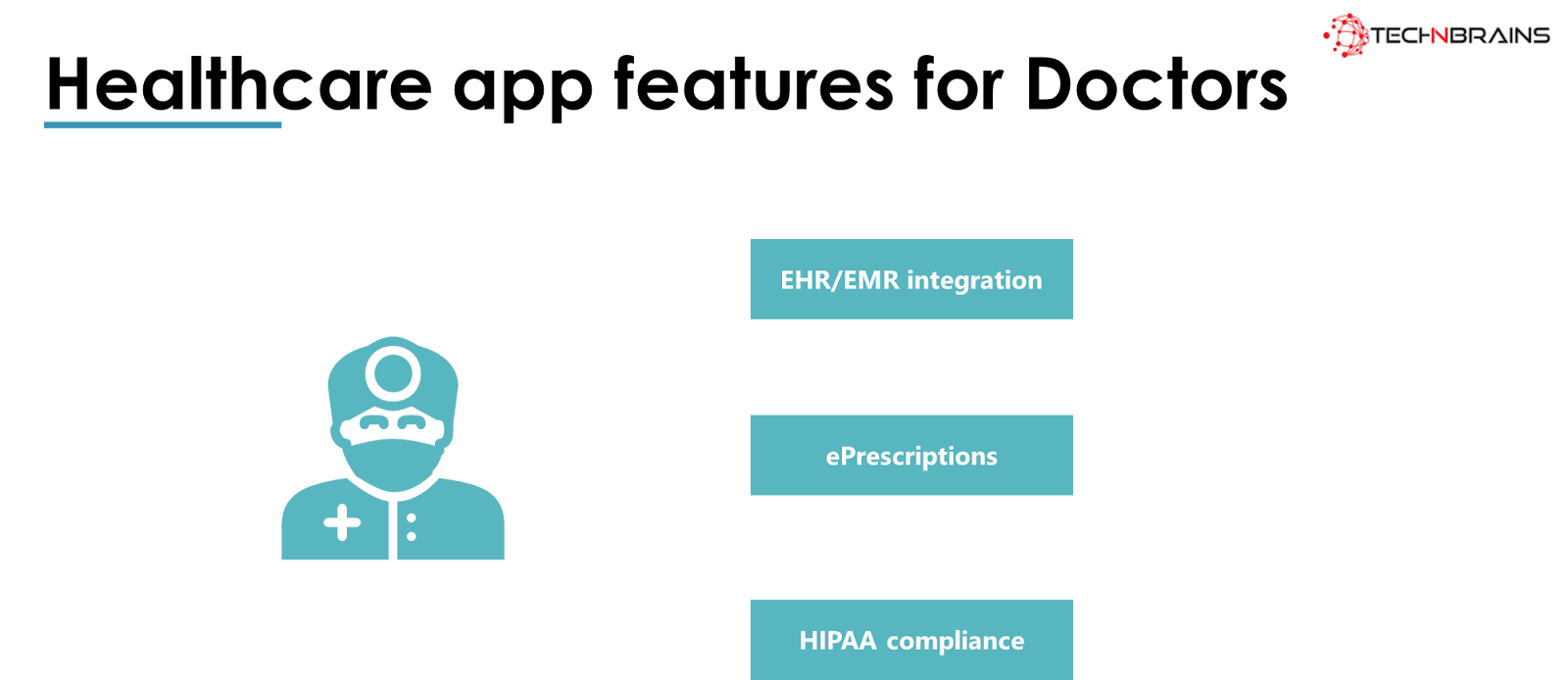
Healthcare App Features for Doctors
- EHR/EMR integration: Electronic Health Record (EHR) or Electronic Medical Record (EMR) integration allows doctors to access and manage patient records digitally, streamlining healthcare workflows.
- e-Prescriptions: This feature enables doctors to electronically prescribe medications to patients, eliminating the need for handwritten prescriptions and improving accuracy and efficiency.
- HIPAA compliance: Healthcare apps must adhere to the Health Insurance Portability and Accountability Act (HIPAA) regulations to ensure patient data security, privacy, and confidentiality. Compliance with HIPAA is crucial to safeguard sensitive health information.
Cost to Build a Healthcare app
These use cases illustrate the diversity of healthcare applications, ranging from telehealth services and electronic health records to diagnostic systems and medical billing solutions.
As healthcare technology continues to evolve, these applications will play an increasingly vital role in transforming the healthcare industry and enhancing patient care. Let us look at the healthcare app development cost below:
| Function / Feature | Estimated Time (hours) | Cost ($) |
| Profile | 60 | $60 |
| Social Sign-Ins | 110 | $110 |
| Push Notifications | 130 | $130 |
| Chat or Messenger | 220 | $220 |
| Video Conferencing | 200 | $200 |
| Geo-Location | 230 | $230 |
| File Storage | 100 | $100 |
| HIPAA Compliance | 250 | $250 |
| Total | 1300 | $1,300 |
The cost of developing a healthcare app depends on the features and capabilities it offers. For healthcare mobile app development, you typically require a team including Front-End Developer, Back-End Developer, DevOps, Business Analyst, Compliance Expert, UI/UX Expert, Project Manager, and Quality Assurance.
Example:
Let’s consider an example of patient-centric on-demand doctor app development and estimate the cost based on the integration of various features:
- Profile: $60
- Social Sign-Ins: $110
- Push Notifications: $130
- Chat or Messenger: $220
- Video Conferencing: $200
- Geo-Location: $230
- File Storage: $100
- HIPAA Compliance: $250
- Total: $1,300
The cost estimation is based on the number of hours required for building the Healthcare app. There are three options for developing a healthcare app: hiring an in-house team, hiring freelancers, or outsourcing.
Hiring an in-house team can be costly, with rates ranging from $100 to $200 per hour. Freelancers may offer cost savings but might not guarantee quality. An outsourcing agency from Ukraine can provide competitive rates.
Here, the cost of developing healthcare applications is approximately $40 per hour on average.
Considering the estimated hours for development, quality assurance, and project management, the cumulative cost for healthcare app development would be $63,200.
Now that we have calculated the cost, let’s move on to the steps of healthcare mobile development.
Please note that the provided cost estimates are approximate and can vary based on project complexity, team rates, and other factors. It’s essential to discuss the specific requirements with a development team to get an accurate cost estimation for a healthcare app.

How to Develop a Healthcare App
To start a successful business, brainstorm a unique idea, research the market, test your hypothesis, create an MVP, and plan the design process. Here is a step-by-step guide to healthcare mobile app development:
Step 1: Brainstorm A Unique Idea
Identify a healthcare problem or challenge that needs a digital solution. Conduct market research to understand the demand and competition in the healthcare app market. Seek feedback from healthcare professionals and potential users to validate the feasibility of your idea.
Step 2: Research The Market
Research the target audience and potential user base for the healthcare app. Analyze data using tools like Google Trends and Google Keywords Planner to understand market trends and user preferences. Seek feedback from entrepreneurs and healthcare experts to gain insights into the industry and customer needs.
Step 3: Test Your Hypothesis
Plan for customer acquisition by using targeted ads and creating user-friendly landing pages. Conduct customer interviews and usability tests to validate the effectiveness and appeal of your app. Utilize promotion and marketing strategies to reach your target audience and build a customer/user base.
Step 4: Create An MVP
Develop an MVP that includes the core features of the healthcare app. Focus on essential functions, such as finding specialists, booking appointments, chatting with doctors, and storing medical records. Integrate key features like geolocation, HIPAA-compliant messaging, cloud storage, push notifications, and calendar and scheduling.
Step 5: Plan the Design Process
Ensure that the healthcare app has an intuitive and user-friendly design. Pay attention to UI/UX elements, screen rotations, button placement, and overall visual appeal. Design an app that stands out in the competitive healthcare market and provides a seamless user experience.
By following these steps, you can create a successful healthcare app that addresses specific healthcare challenges, meets user needs, and offers a valuable solution to both healthcare professionals and patients. Remember that ongoing maintenance and updates are also vital to keep the app relevant and efficient over time.
Process to Build An Admin Panel For A Healthcare App
Building an admin panel for a healthcare app requires careful planning and execution to ensure it meets the specific needs of healthcare professionals and administrators. Below is a step-by-step process to build an effective admin panel:
Step 1: Define Requirements and Functionalities
Work closely with healthcare professionals and administrators to understand their specific needs and requirements. Identify the key functionalities that the admin panel should include, such as user management, patient records management, appointment scheduling, analytics and reporting, data visualization, and access control.
Step 2: Design the User Interface (UI)
Create a user-friendly and intuitive UI design for the admin panel. The design should be easy to navigate and visually appealing. Consider using healthcare-related colors and themes to create a cohesive look with the main healthcare app.
Step 3: Choose the Technology Stack
Select the appropriate technology stack for the development of the admin panel. Consider factors such as scalability, security, and ease of integration with the main healthcare app and other systems. Common technology choices include front-end frameworks like React or Angular, and back-end technologies like Node.js or Ruby on Rails.
Step 4: Implement User Authentication and Authorization
Security is crucial in a healthcare admin panel. Implement robust user authentication and authorization mechanisms to ensure that only authorized personnel can access and manage sensitive healthcare data. Use secure authentication methods such as two-factor authentication (2FA) or OAuth.
Step 5: Develop User Management Features
Create features to manage user accounts and roles within the admin panel. This includes the ability to add, edit, and delete users, assign different roles and permissions, and manage user access to specific functionalities.
Step 6: Build Patient Records Management
System Design a comprehensive patient records management system within the admin panel. This should allow healthcare professionals to view, update, and manage patient information, medical history, diagnoses, treatments, and test results securely.
Step 7: Implement Appointment Scheduling
Include a feature for healthcare professionals to schedule and manage appointments with patients. The admin panel should provide an easy-to-use calendar interface with options to view, create, reschedule, and cancel appointments.
Step 8: Integrate Analytics and Reporting
Develop analytics and reporting capabilities to provide insights into various aspects of healthcare operations. This may include data visualizations, charts, and graphs to monitor key performance indicators (KPIs), patient outcomes, and resource utilization.
Step 9: Test and Quality Assurance
Thoroughly test the admin panel to identify and fix any bugs or issues. Conduct rigorous quality assurance to ensure the panel functions smoothly and meets all the defined requirements.
Step 10: Deploy and Monitor
Deploy the admin panel on a secure and scalable server. Monitor its performance, user activity, and security continuously to address any potential issues promptly.
Step 11: Provide Ongoing Support and Updates
Offer ongoing technical support and maintenance for the admin panel. Regularly update the panel to add new features, improve security, and enhance performance based on feedback and changing healthcare requirements.
By following this step-by-step process, you can create a robust and efficient admin panel for your healthcare app, enabling healthcare professionals and administrators to manage and optimize healthcare services effectively.
Best Free Healthcare Apps In 2023
While we look into the best free healthcare apps in 2023, check out these 8 free fitness apps to get you started.
1. Apple Health
Apple Health is an all-in-one health app developed by Apple that collects and organizes health-related data from various sources, including iPhones, Apple Watches, and other connected devices. It allows users to track various health metrics such as steps, distance, heart rate, sleep patterns, and more. The app also offers medication reminders, allowing users to set notifications for taking their prescribed medicines on time. Furthermore, it provides the option to store and manage important health records, such as allergies, medications, and medical history. With its comprehensive features, Apple Health aims to help users monitor their overall health and well-being.
Key Features:
- Data collection from various sources like iPhones and Apple Watches
- Tracking of physical activity, heart rate, sleep, and more
- Medication reminders and management
- Storage and organization of health records
2. MyFitnessPal

MyFitnessPal is a popular health and fitness app that serves as a comprehensive tool for tracking both diet and exercise. It boasts an extensive database of food items with nutritional values, allowing users to log their daily food intake and monitor calorie consumption. The app also includes a fitness segment that enables users to track their workouts and physical activities. By providing insights into users’ calorie intake and expenditure, MyFitnessPal helps individuals achieve their fitness goals and maintain a balanced lifestyle.
Key Features:
- Extensive database of food items with nutritional information
- Calorie tracking and monitoring of food intake
- Fitness segment for logging workouts and physical activities
3. Fitbit
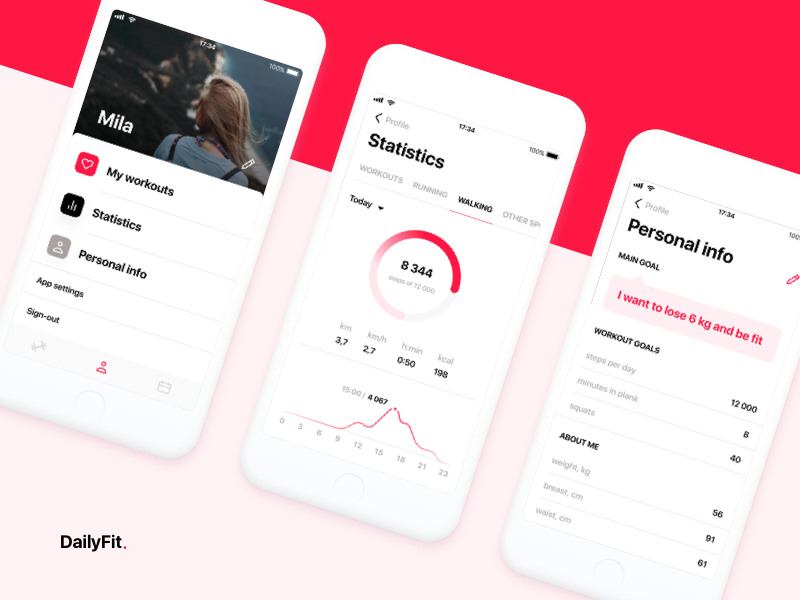
Fitbit is a well-known fitness tracker that comes with various sensors to monitor users’ health and fitness metrics. The device tracks heart rate, Electrodermal Activity (EDA), temperature, sleep patterns, and menstrual cycles for female users. Fitbit provides real-time data on physical activities and allows users to set personal fitness goals. With its user-friendly app and wearable devices, Fitbit encourages users to stay active and maintain a healthy lifestyle.
Key Features:
- Tracking of heart rate, EDA, temperature, sleep patterns, and menstrual cycles
- Real-time monitoring of physical activities
- Personalized fitness goals setting
4. BetterMe
BetterMe is a health and wellness app that focuses on promoting a healthy lifestyle without extreme weight loss methods. It offers customized workout plans, meal plans, and meditation sessions to improve overall well-being. The app aims to help users develop sustainable habits and make positive changes in their lives.
Key Features:
- Customized workout plans
- Personalized meal plans
- Meditation sessions for stress reduction and relaxation
5. Noom
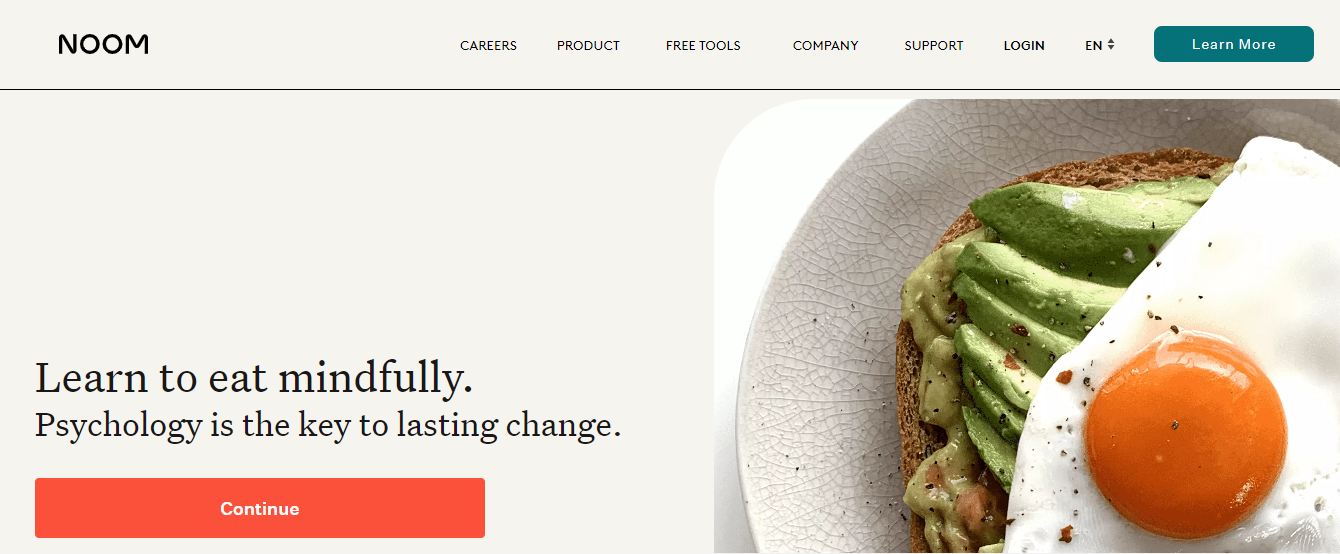
Noom started as a weight management business and has now expanded into offering behavior change programs for both chronic and non-chronic health conditions. The app provides personalized coaching, tracking tools, and educational resources to support users in their health journey. Noom aims to help users build healthier habits and achieve their health and wellness goals.
Key Features:
- Personalized coaching and support
- Behavior change programs for various health conditions
- Tracking tools and educational resources
6. Lose It!

Lose It! is a weight loss app that assists users in achieving their diet goals. It allows users to log their food and water intake, providing insights into their calorie consumption. The app sets personalized calorie targets based on users’ weight loss goals and helps them stay on track with their diet plan.
Key Features:
- Food and water intake tracking
- Personalized calorie targets
- Support for weight loss goals
7. WeightWatchers

WeightWatchers is a well-known weight loss program that converts nutritional information into a points system. Users track their calorie intake by assigning points to different foods and meals. The app also offers personalized coaching and support to help individuals achieve their weight loss goals effectively.
Key Features:
- Points-based system to track calorie intake
- Personalized coaching and support
8. Flo

Flo is a highly popular ovulation and period tracker, fertility calendar, and pregnancy assistant app. It helps women track their menstrual cycles, fertility windows, and ovulation dates. The app provides personalized insights and reminders to help women plan or prevent pregnancies effectively.
Key Features:
- Menstrual cycle tracking
- Fertility calendar and ovulation tracking
- Pregnancy assistant features
9. Waterlogged
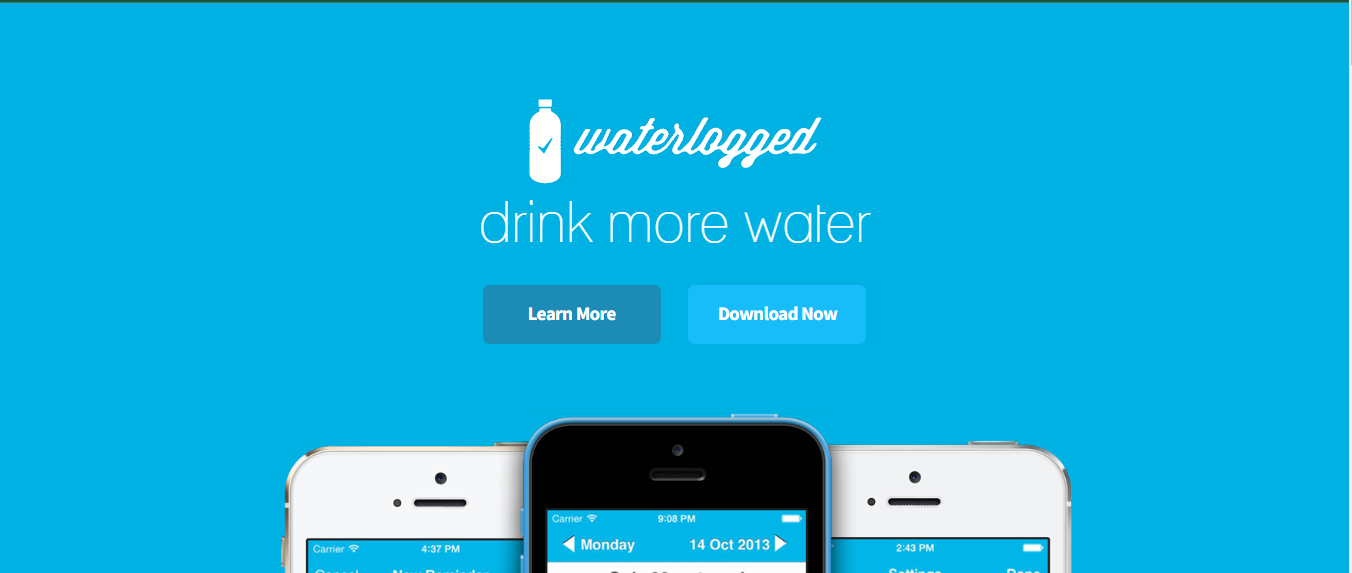
Waterlogged is a water tracking app that allows users to set goals for their daily water consumption and receive reminders to stay hydrated. The app helps individuals maintain proper hydration levels throughout the day and supports overall health and well-being.
Key Features:
- Water consumption tracking
- Goal setting for daily water intake
- Reminders to drink water regularly
10. Fastic
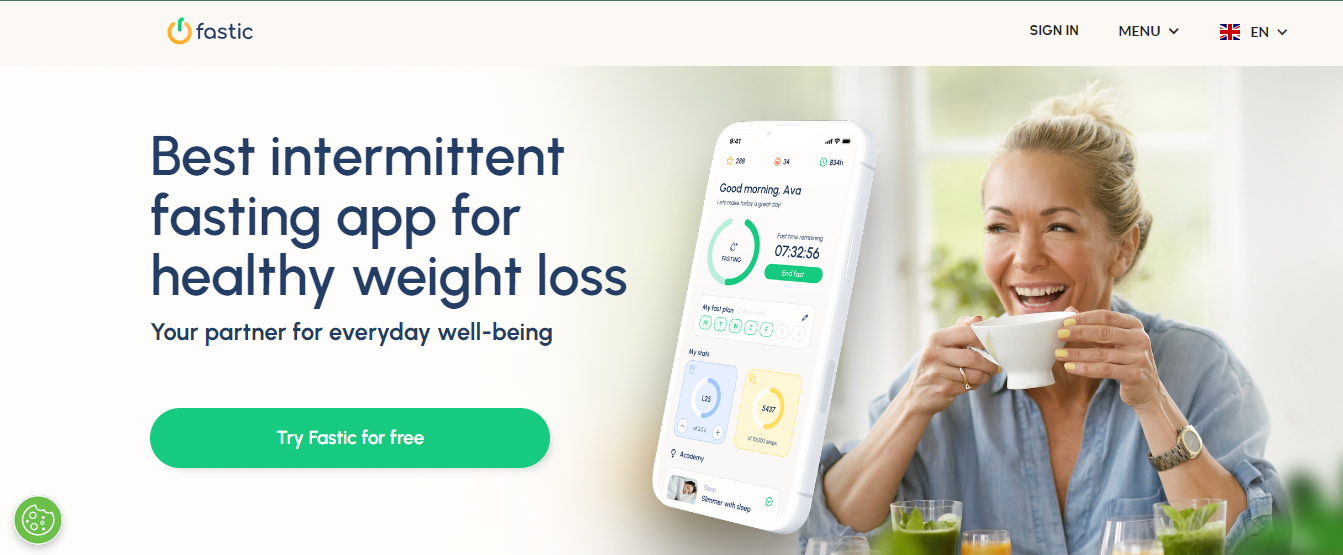
Fastic promotes weight loss through a program of intermittent fasting, mindfulness, improved nutrition, and better sleep. It offers personalized fasting plans and tracks users’ fasting progress. The app also provides resources and guidance to support a healthy lifestyle.
Key Features:
- Intermittent fasting plans
- Mindfulness and nutrition guidance
- Fasting progress tracking
These top health apps offer a wide range of features and functionalities to support users in their health and wellness journey. From fitness tracking and calorie monitoring to fertility tracking and intermittent fasting plans, these apps cater to various health needs and goals.
How can TechnBrains help you build a healthcare app
TechnBrains can be your reliable healthcare mobile app development company by offering expertise in the following areas:
Data Security Requirements
TechnBrains understands the critical importance of data security in healthcare app development. Healthcare apps deal with sensitive and personal information, including medical records, patient details, and health-related data.
To ensure the highest level of data security, TechnBrains employs robust encryption techniques, secure data storage practices, and adherence to industry standards like HIPAA compliance. Our team conducts thorough security audits to identify and address potential vulnerabilities, protecting your app and users’ data from unauthorized access.
Integrations
TechnBrains has expertise in integrating healthcare apps with Electronic Health Record (EHR) systems, payment gateways, pharmacy databases, and telehealth platforms, among others.
These integrations enable smooth data exchange and communication between different healthcare entities, streamlining workflows for both medical professionals and patients.
New Age Development Features
TechnBrains stays at the forefront of technology trends and incorporates new-age development features in healthcare apps. This includes AI-driven functionalities for personalized health recommendations, machine learning algorithms for predictive analysis, and virtual reality (VR) for medical training and patient education.
Our team constantly researches and implements emerging technologies to enhance the user experience and provide innovative solutions to healthcare challenges.
Technology Stack for Healthcare Mobile App Development
TechnBrains employs a robust technology stack for healthcare mobile app development, ensuring optimal performance and scalability. This stack typically includes platforms like React Native or Flutter for cross-platform development to reach a wider audience on both iOS and Android devices.
We utilize backend technologies such as Node.js or Ruby on Rails for efficient data processing and server-side operations. Additionally, we leverage cloud services like AWS or Azure for secure and scalable data storage.
Our Approach to Healthcare App Development
- Thoroughly understand your healthcare app idea and specific requirements.
- Conduct in-depth market research and analysis to identify target users and competitors.
- Design a user-centric and intuitive app interface for an enhanced user experience.
- Implement robust security measures to protect sensitive healthcare data.
- Integrate necessary features and APIs to enhance app functionality.
- Regularly test and validate the app for performance, security, and usability.
- Provide ongoing maintenance and support to ensure the app’s smooth operation.
By choosing TechnBrains as your healthcare app development partner, you can rest assured that your app will be built with the utmost care, adhering to industry standards, and incorporating the latest technologies to deliver a secure, efficient, and user-friendly healthcare solution.
FAQs
How do I get the MyChart app?
To get the MyChart app, follow these steps:
For Android users:
- Open the Google Play Store on your Android device.
- In the search bar, type “MyChart” and press enter.
- Locate the official MyChart app from Epic Systems Corporation.
- Tap “Install” to download and install the app on your device.
For iOS (iPhone/iPad) users:
- Open the App Store on your iOS device.
- In the search bar, type “MyChart” and press enter.
- Find the official MyChart app from Epic Systems Corporation.
- Tap the “Get” button to download and install the app on your device.
Who is the best medical app?
Determining the “best” medical app can depend on your specific needs and preferences. Several medical apps offer different features and focus on various aspects of healthcare. It’s essential to consider factors like user reviews, functionality, security, and compatibility with your device. To find the best medical app for you, consider checking app stores’ top-rated medical apps and reading reviews to see which one suits your requirements the most.
What apps are used for healthcare?
There are numerous apps used for various healthcare purposes. Some common types of healthcare apps include:
- Telemedicine apps: Connect patients with healthcare professionals for virtual consultations
- Medication management apps: Help users track and manage their medications and reminders.
- Health tracking apps: Monitor fitness, nutrition, sleep patterns, and overall wellness.
- Medical reference apps: Provide medical information and references for healthcare professionals.
- Mental health apps: Offer tools and resources for managing mental well-being and emotional health.
Is the UnitedHealthcare app free?
Yes, the UnitedHealthcare app is free to download from Google Play Store for Android or App Store for iOS.
In This Article
Blocked by Backlog or Missed Deadlines?
Senior developers who build, fix, and ship, without slowing your team down.